Predict the products of the sulfuric acid-catalyzed dehydration of the following alcohols. When more than one product is expected, label the major and minor products. (d) 1-isopropylcyclohexanol (e) 2-methylcyclohexanol
Verified step by step guidance
1
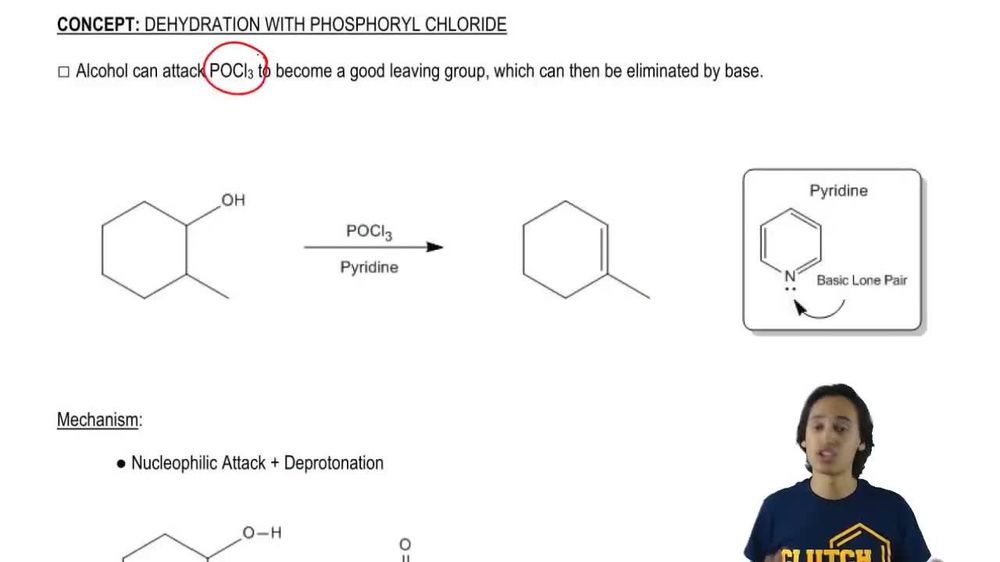
Step 1: Understand the reaction mechanism. Sulfuric acid-catalyzed dehydration of alcohols typically proceeds via an E1 mechanism for secondary and tertiary alcohols. The reaction involves protonation of the hydroxyl group, formation of a carbocation intermediate, and elimination of water to form an alkene.
Step 2: Analyze the structure of the alcohols. For (d) 1-isopropylcyclohexanol, the hydroxyl group is attached to a secondary carbon. For (e) 2-methylcyclohexanol, the hydroxyl group is also attached to a secondary carbon. Both alcohols will form carbocations upon dehydration.
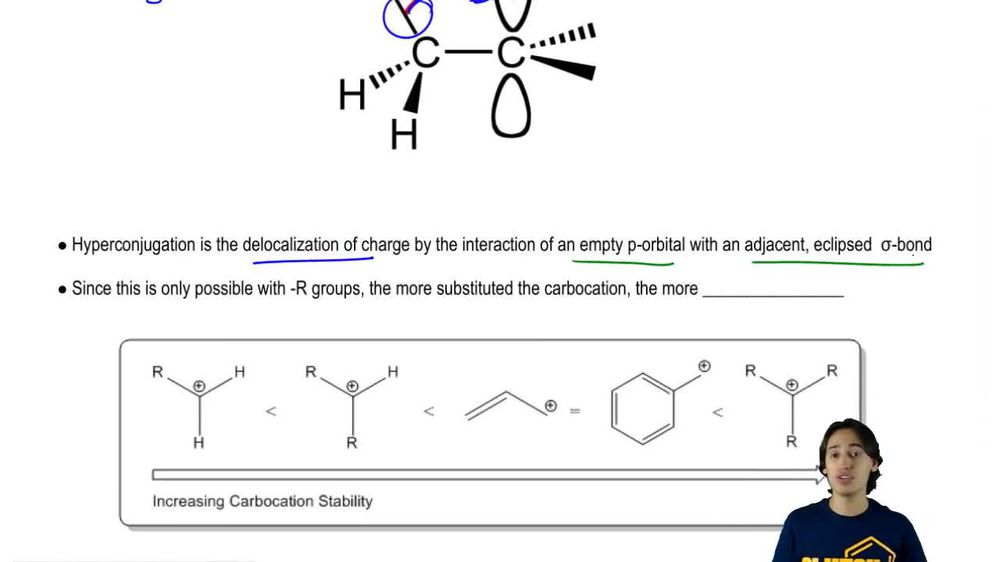
Step 3: Consider carbocation stability. In (d), the carbocation formed after dehydration will be influenced by the isopropyl group, which provides hyperconjugation and inductive effects to stabilize the carbocation. In (e), the carbocation formed will be stabilized by the methyl group through similar effects.
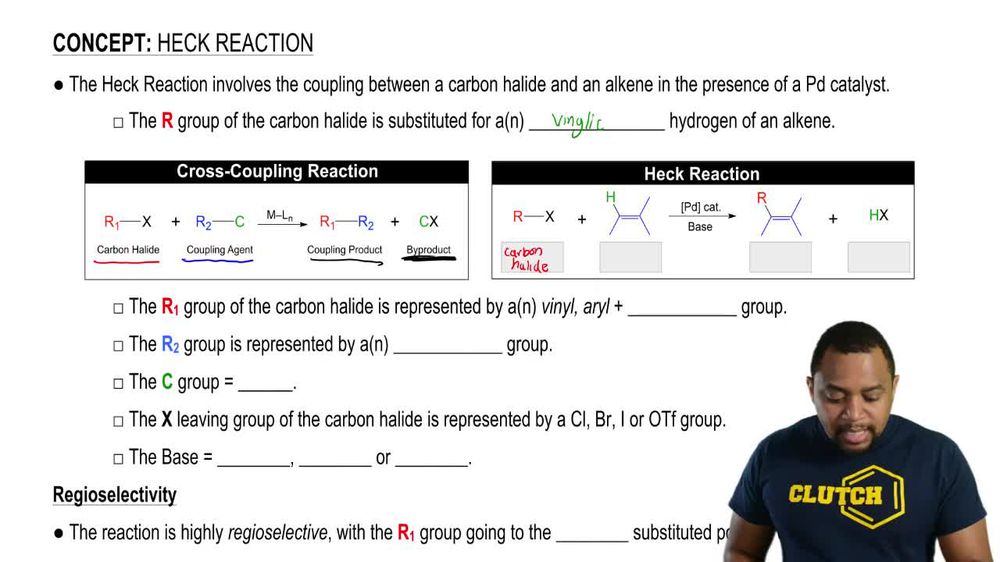
Step 4: Predict the possible alkenes. For (d), elimination of a proton from adjacent carbons to the carbocation will yield different alkenes. Apply Zaitsev's rule, which states that the more substituted alkene is the major product. For (e), follow the same process to predict the alkenes and identify the major and minor products.
Step 5: Label the major and minor products. Based on Zaitsev's rule, the major product will be the more substituted alkene, while the minor product will be the less substituted alkene. Consider steric and electronic factors to finalize the labeling of major and minor products for both (d) and (e).
Verified video answer for a similar problem:
This video solution was recommended by our tutors as helpful for the problem above
Video duration:
4m
Play a video:
0 Comments
Key Concepts
Here are the essential concepts you must grasp in order to answer the question correctly.
Dehydration of Alcohols
Dehydration of alcohols is a chemical reaction where an alcohol loses a water molecule, typically in the presence of an acid catalyst like sulfuric acid. This process often leads to the formation of alkenes. The reaction can proceed via either an E1 or E2 mechanism, depending on the structure of the alcohol and the reaction conditions, influencing the regioselectivity of the products.
Regioselectivity refers to the preference of a chemical reaction to yield one structural isomer over others when multiple products are possible. In the dehydration of alcohols, the more stable alkene (often the more substituted one) is typically formed as the major product due to greater stability from hyperconjugation and alkyl substitution, while less stable isomers are considered minor products.
Carbocation stability is a key factor in determining the outcome of dehydration reactions. Carbocations are positively charged carbon species that can form during the reaction. Their stability increases with the degree of substitution: tertiary carbocations are more stable than secondary, which are more stable than primary. This stability influences which alkene product is favored in the dehydration process.

 4:05 minutes
 Verified step by step guidance
 01:23
01:23