For each of the following molecules, indicate the hybridization of each carbon and give the approximate values of all the bond angles: a. CH3C≡CH
Verified step by step guidance
1
Step 1: Analyze the structure of the molecule CH3C≡CH. The molecule consists of three carbons: one in the methyl group (CH3), one in the triple bond (C≡), and one in the terminal alkyne (CH).
Step 2: Determine the hybridization of each carbon atom. The carbon in the CH3 group is bonded to three hydrogens and one other carbon, making it sp³ hybridized. The carbon in the triple bond (C≡) is bonded to one other carbon and one hydrogen, making it sp hybridized. The terminal carbon (CH) is also sp hybridized due to its triple bond.
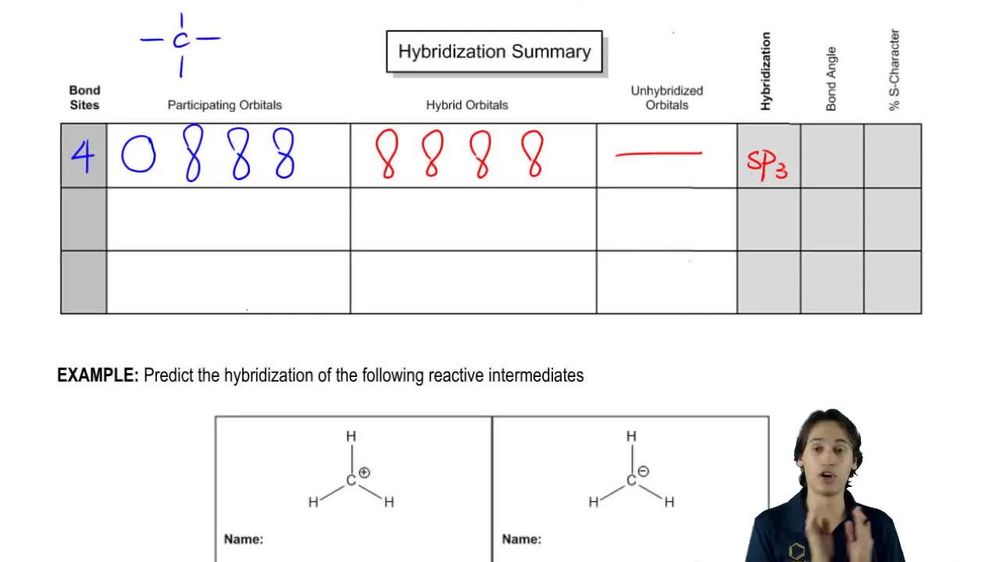
Step 3: Recall the bond angles associated with each hybridization. For sp³ hybridized carbons, the bond angles are approximately 109.5° (tetrahedral geometry). For sp hybridized carbons, the bond angles are approximately 180° (linear geometry).
Step 4: Assign the bond angles to each carbon. The CH3 carbon has bond angles of approximately 109.5°. The C≡ carbon and the terminal CH carbon both have bond angles of approximately 180° due to their linear geometry.
Step 5: Summarize the findings. The CH3 carbon is sp³ hybridized with bond angles of 109.5°. The C≡ carbon and the terminal CH carbon are sp hybridized with bond angles of 180°.
Verified video answer for a similar problem:
This video solution was recommended by our tutors as helpful for the problem above
Video duration:
2m
Play a video:
0 Comments
Key Concepts
Here are the essential concepts you must grasp in order to answer the question correctly.
Hybridization
Hybridization is the concept of mixing atomic orbitals to form new hybrid orbitals that can accommodate the bonding requirements of atoms in a molecule. In organic chemistry, carbon typically undergoes sp, sp², or sp³ hybridization, depending on its bonding environment. For example, sp hybridization occurs when a carbon atom forms two sigma bonds and has two unhybridized p orbitals, as seen in alkynes.
Bond angles are the angles formed between adjacent bonds in a molecule, which are influenced by the hybridization of the atoms involved. In sp hybridized carbon, the bond angles are approximately 180 degrees due to the linear arrangement of the bonds. Understanding bond angles is crucial for predicting the geometry and reactivity of organic molecules.
Alkynes are a class of hydrocarbons characterized by at least one carbon-carbon triple bond. The presence of a triple bond leads to sp hybridization of the carbon atoms involved, resulting in a linear geometry. In the case of CH3C≡CH, the terminal carbon atoms are sp hybridized, while the central carbon is also sp hybridized, contributing to the overall linear structure of the molecule.

 2:00 minutes
 Verified step by step guidance
 10:43
10:43