Provide the expected product for the reaction of each of the following alkenes with (i) HBr and (ii) HBr, H2O2 (b)
Verified step by step guidance
1
Identify the structure of the alkene involved in the reaction. Alkenes are hydrocarbons with a carbon-carbon double bond, which is the site of reactivity in these reactions.
For the reaction with HBr alone, apply Markovnikov's rule. This rule states that in the addition of HX (where X is a halogen) to an alkene, the hydrogen atom will attach to the carbon with the greater number of hydrogen atoms already attached, and the halogen will attach to the carbon with fewer hydrogen atoms. This results in the formation of the more stable carbocation intermediate.
Draw the intermediate carbocation formed after the initial addition of HBr to the alkene. Consider the stability of the carbocation, as tertiary carbocations are more stable than secondary, which are more stable than primary.
For the reaction with HBr and H₂O₂, apply anti-Markovnikov's rule. In the presence of peroxides, the addition of HBr to an alkene proceeds via a radical mechanism, where the bromine atom attaches to the carbon with more hydrogen atoms, opposite to Markovnikov's rule.
Draw the expected product for each reaction, considering the regioselectivity (Markovnikov vs. anti-Markovnikov) and the mechanism (ionic vs. radical) involved in each case.
Verified video answer for a similar problem:
This video solution was recommended by our tutors as helpful for the problem above
Video duration:
3m
Play a video:
0 Comments
Key Concepts
Here are the essential concepts you must grasp in order to answer the question correctly.
Markovnikov's Rule
Markovnikov's Rule states that in the addition of HX (where X is a halogen) to an alkene, the hydrogen atom will attach to the carbon with more hydrogen atoms, and the halogen will attach to the carbon with fewer hydrogen atoms. This rule helps predict the major product in the absence of peroxides.
Anti-Markovnikov addition occurs when HBr is added to an alkene in the presence of peroxides (H₂O₂). The reaction proceeds via a radical mechanism, resulting in the bromine atom attaching to the less substituted carbon, opposite to Markovnikov's Rule, due to the influence of the radical initiator.
Anti-Markovnikov addition of alcohols to terminal alkynes yields aldehydes
Radical Mechanism
A radical mechanism involves the formation of free radicals, which are highly reactive species with unpaired electrons. In the presence of peroxides, the addition of HBr to alkenes follows a radical pathway, leading to anti-Markovnikov products. Understanding this mechanism is crucial for predicting product formation in peroxide-mediated reactions.

 3:23 minutes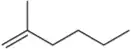
 Verified step by step guidance
 03:54
03:54