Draw skeletal structures for the following: e. 2-methyl-4-(1-methylethyl)octane
Verified step by step guidance
1
Step 1: Start by identifying the parent chain. The parent chain is 'octane,' which means it contains 8 carbon atoms in a straight chain. Draw a straight chain of 8 carbons as the backbone of the molecule.
Step 2: Number the carbon atoms in the parent chain from left to right (or right to left) to ensure the substituents are assigned the lowest possible numbers. This numbering will help in placing the substituents correctly.
Step 3: Locate the substituents. The first substituent is '2-methyl,' which means a methyl group (-CH₃) is attached to the second carbon of the parent chain. Add this methyl group to the second carbon.
Step 4: The second substituent is '4-(1-methylethyl),' which refers to an isopropyl group (-CH(CH₃)₂) attached to the fourth carbon of the parent chain. Draw the isopropyl group branching off the fourth carbon.
Step 5: Verify the structure by ensuring all carbons have the correct number of bonds (four bonds per carbon) and that the substituents are placed according to the IUPAC naming rules. Confirm the skeletal structure is complete and matches the name '2-methyl-4-(1-methylethyl)octane.'
Verified video answer for a similar problem:
This video solution was recommended by our tutors as helpful for the problem above
Video duration:
9m
Play a video:
0 Comments
Key Concepts
Here are the essential concepts you must grasp in order to answer the question correctly.
Skeletal Structures
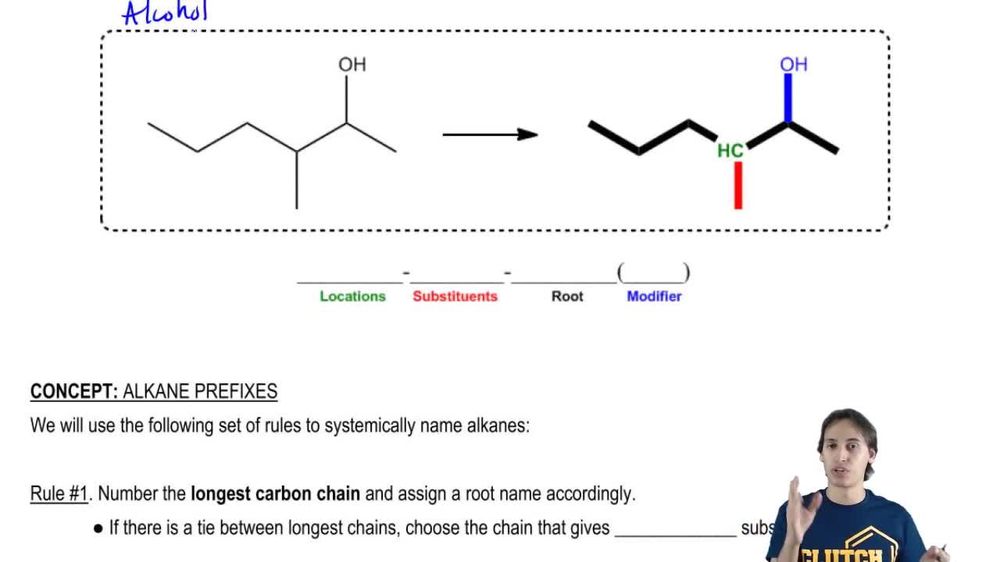
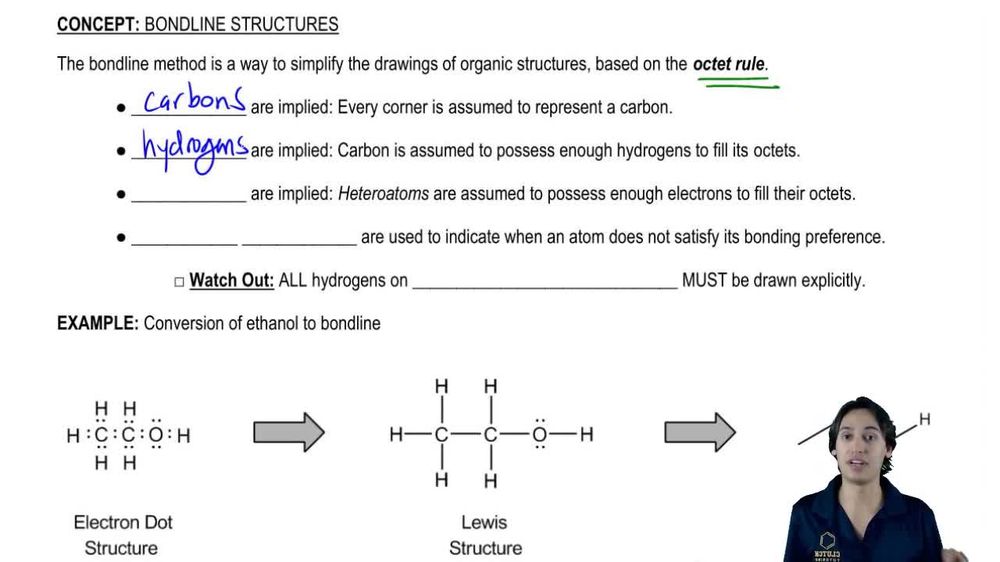
Skeletal structures, or line-angle formulas, are simplified representations of organic molecules where carbon atoms are implied at the ends and intersections of lines. Hydrogen atoms attached to carbons are usually omitted for clarity. This notation allows chemists to visualize the molecular framework quickly, focusing on the connectivity and functional groups rather than individual atoms.
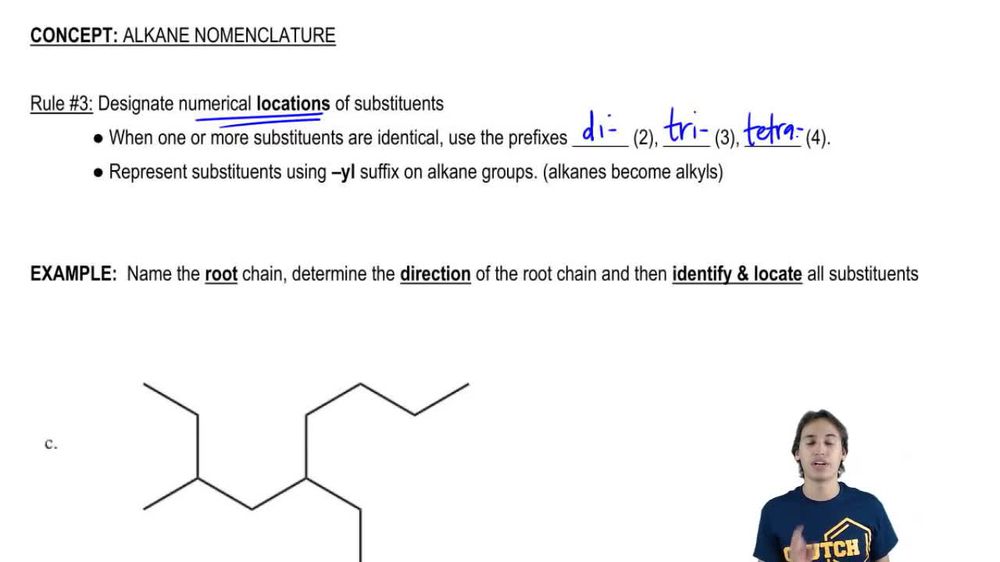
IUPAC nomenclature is a systematic method for naming organic chemical compounds. It provides a set of rules to derive the name from the structure, ensuring that each compound has a unique and descriptive name. Understanding the nomenclature helps in identifying the structure of a compound based on its name, such as recognizing substituents and the longest carbon chain.
Substituents are atoms or groups of atoms that replace hydrogen atoms in a hydrocarbon chain, affecting the compound's properties and reactivity. In the case of 2-methyl-4-(1-methylethyl)octane, recognizing the positions and types of substituents is crucial for accurately drawing the skeletal structure. Branching can significantly influence the physical and chemical characteristics of the molecule.

 9:02 minutes
 Verified step by step guidance
 04:03
04:03