
Correct the following incorrect names using standard IUPAC nomenclature. [Draw a compound that corresponds to the incorrect name, and then rename it.] (a) 4-methylhexane
Verified step by step guidance
1
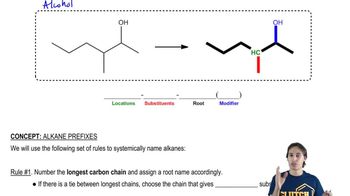
Draw the structure of the compound based on the incorrect name '4-methylhexane'. Start with a six-carbon chain (hexane) as the parent chain, and place a methyl group (-CH₃) on the fourth carbon.
Check the numbering of the parent chain to ensure it follows the IUPAC rule of assigning the lowest possible locants to substituents. In this case, the chain should be renumbered if necessary.
Identify the longest continuous carbon chain that includes the substituent. If the numbering can be adjusted to give a lower number to the substituent, do so.
Rename the compound based on the corrected numbering and structure. Ensure the substituent's position and name are correctly included in the IUPAC name.
Verify the final name by cross-checking it with IUPAC rules, ensuring that the name is unambiguous and follows the standard conventions.
Verified video answer for a similar problem:
This video solution was recommended by our tutors as helpful for the problem above
Play a video:
0 Comments
Key Concepts
Here are the essential concepts you must grasp in order to answer the question correctly.
IUPAC Nomenclature
IUPAC nomenclature is a systematic method for naming organic chemical compounds. It provides rules for naming based on the structure of the molecule, including the longest carbon chain, functional groups, and substituents. Understanding these rules is essential for accurately identifying and renaming compounds, ensuring clear communication in the scientific community.
Structural representation involves depicting the arrangement of atoms within a molecule, which is crucial for understanding its properties and reactivity. Drawing the compound corresponding to a name allows one to visualize the molecular structure, identify any discrepancies in the name, and apply IUPAC rules to correct it. This skill is fundamental in organic chemistry for both learning and practical applications.
In organic chemistry, substituents are groups of atoms that replace hydrogen atoms in a hydrocarbon chain, while the parent chain is the longest continuous chain of carbon atoms. Correctly identifying the parent chain and its substituents is vital for proper nomenclature. For example, in the name '4-methylhexane', recognizing the hexane as the parent chain and the methyl group as a substituent is key to renaming the compound accurately.