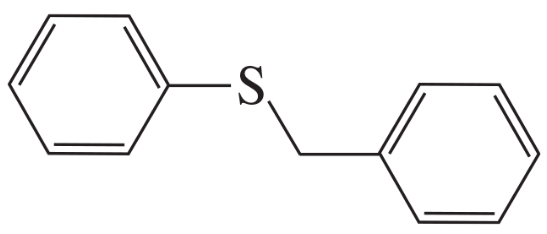
Using an alkyl halide and a thiol as starting materials, how would you prepare the following thioethers? c. d.
Verified step by step guidance
1
Step 1: Identify the structure of the thioether product. The given thioether has two alkyl groups attached to a sulfur atom. In this case, the alkyl groups are isopropyl groups.
Step 2: Choose the appropriate alkyl halide and thiol starting materials. To form the thioether, you need an alkyl halide with the isopropyl group (e.g., isopropyl bromide or isopropyl chloride) and a thiol with the same isopropyl group (e.g., isopropyl thiol).
Step 3: Plan the reaction mechanism. The reaction involves a nucleophilic substitution (SN2) mechanism where the thiol acts as a nucleophile and attacks the alkyl halide, displacing the halide ion.
Step 4: Write the reaction conditions. Combine the alkyl halide and thiol in the presence of a base (e.g., NaOH or KOH) to deprotonate the thiol, increasing its nucleophilicity. The reaction is typically carried out in a polar aprotic solvent like acetone or DMSO.
Step 5: Perform the reaction. Mix the isopropyl thiol and isopropyl halide under the specified conditions to yield the desired thioether product.
Verified video answer for a similar problem:
This video solution was recommended by our tutors as helpful for the problem above
Video duration:
2m
Play a video:
0 Comments
Key Concepts
Here are the essential concepts you must grasp in order to answer the question correctly.
Thioether Formation
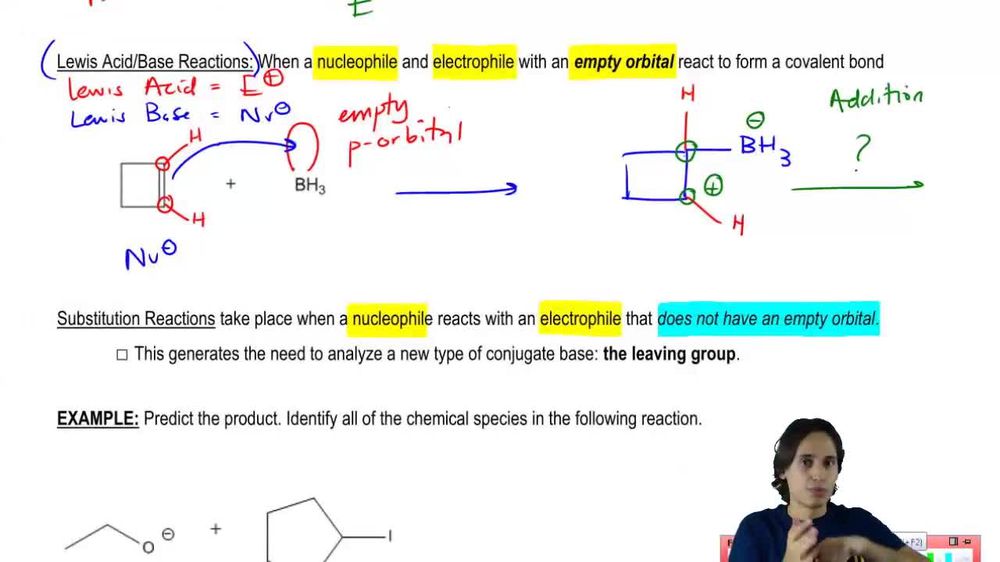
Thioethers are organic compounds containing a sulfur atom bonded to two alkyl or aryl groups. They can be synthesized through the nucleophilic substitution reaction of an alkyl halide with a thiol. The thiol acts as a nucleophile, attacking the electrophilic carbon of the alkyl halide, resulting in the formation of a thioether and the release of a halide ion.
Nucleophilic substitution reactions can occur via two main mechanisms: SN1 and SN2. In SN2 reactions, a nucleophile attacks the electrophilic carbon from the opposite side of the leaving group, leading to a concerted reaction. In contrast, SN1 reactions involve the formation of a carbocation intermediate, followed by nucleophilic attack. Understanding these mechanisms is crucial for predicting the outcome of reactions involving alkyl halides.
Nucleophiles and Electrophiles can react in Substitution Reactions.
Reactivity of Alkyl Halides
Alkyl halides are organic compounds where a halogen atom is bonded to an alkyl group. Their reactivity in nucleophilic substitution reactions depends on the structure of the alkyl group and the type of halogen. Primary alkyl halides typically undergo SN2 reactions, while tertiary halides favor SN1 mechanisms due to steric hindrance. Recognizing the type of alkyl halide is essential for determining the appropriate synthetic pathway for thioether preparation.

 2:11 minutes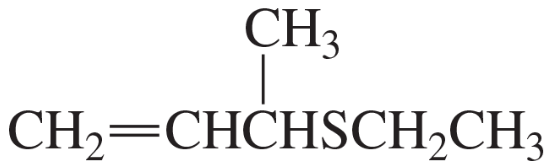
 Verified step by step guidance
 02:26
02:26