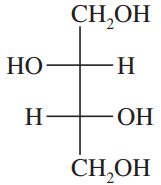
For each Fischer projection, label each asymmetric carbon atom as (R) or (S). (e) (f)
Verified step by step guidance
1
Step 1: Identify the asymmetric carbon atoms in each Fischer projection. An asymmetric carbon is a carbon atom bonded to four different groups. In both structures, the two middle carbon atoms are asymmetric.
Step 2: Assign priorities to the substituents around each asymmetric carbon based on the Cahn-Ingold-Prelog (CIP) priority rules. Higher atomic numbers get higher priority. For example, -OH has a higher priority than -H.
Step 3: Determine the configuration (R or S) for each asymmetric carbon. To do this, orient the molecule so that the lowest priority group (usually H) is pointing away from you. Then, trace the path from the highest priority group (1) to the second (2) and third (3). If the path is clockwise, the configuration is (R); if counterclockwise, it is (S).
Step 4: For the first structure, analyze the top asymmetric carbon and assign its configuration (R or S) using the steps above. Repeat the process for the bottom asymmetric carbon.
Step 5: For the second structure, repeat the same process as in Step 4. Assign the configuration (R or S) for the top and bottom asymmetric carbons. Ensure to double-check the orientation of the lowest priority group to avoid errors.
Verified video answer for a similar problem:
This video solution was recommended by our tutors as helpful for the problem above
Video duration:
2m
Play a video:
0 Comments
Key Concepts
Here are the essential concepts you must grasp in order to answer the question correctly.
Fischer Projections
Fischer projections are a two-dimensional representation of three-dimensional organic molecules, particularly useful for depicting stereochemistry. In these diagrams, vertical lines represent bonds that project away from the viewer, while horizontal lines indicate bonds that project towards the viewer. This format is especially helpful for visualizing the configuration of chiral centers in molecules.
Chirality refers to the property of a molecule that makes it non-superimposable on its mirror image, often due to the presence of asymmetric carbon atoms. An asymmetric carbon, or chiral center, is a carbon atom bonded to four different substituents, leading to two possible configurations: (R) for rectus (right) and (S) for sinister (left). Identifying these centers is crucial for understanding the stereochemistry of organic compounds.
The Cahn-Ingold-Prelog (CIP) priority rules are a systematic method for determining the (R) or (S) configuration of chiral centers. According to these rules, substituents attached to the chiral carbon are ranked based on atomic number, with higher atomic numbers receiving higher priority. If two substituents have the same atomic number, the next atoms in the substituent chain are compared until a difference is found, guiding the assignment of (R) or (S) based on the spatial arrangement.

 2:55 minutes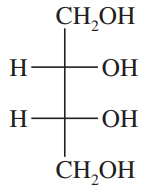
 Verified step by step guidance
 09:56
09:56