Explain how 1-butanol can be converted into the following compounds: a.
Verified step by step guidance
1
Step 1: Recognize that the target compound is an ester, specifically ethyl butanoate. Esters are typically formed through a reaction between a carboxylic acid and an alcohol in the presence of an acid catalyst.
Step 2: Convert 1-butanol into butanoic acid. This can be achieved by oxidizing 1-butanol using an oxidizing agent such as potassium dichromate (K₂Cr₂O₇) in acidic conditions (H₂SO₄). The primary alcohol is oxidized to a carboxylic acid.
Step 3: Prepare ethanol, which will act as the alcohol component in the esterification reaction. Ethanol is readily available and does not require synthesis in this case.
Step 4: Perform the esterification reaction. Mix butanoic acid and ethanol in the presence of a strong acid catalyst, such as concentrated sulfuric acid (H₂SO₄). Heat the mixture to promote the reaction, which forms ethyl butanoate and water as byproducts.
Step 5: Purify the ester product. Use techniques such as distillation to separate ethyl butanoate from the reaction mixture, ensuring the removal of unreacted starting materials and byproducts.
Verified video answer for a similar problem:
This video solution was recommended by our tutors as helpful for the problem above
Video duration:
1m
Play a video:
0 Comments
Key Concepts
Here are the essential concepts you must grasp in order to answer the question correctly.
Alcohol Functional Group
1-butanol is a primary alcohol, characterized by the presence of a hydroxyl (-OH) group attached to a carbon chain. Understanding the properties of alcohols, including their reactivity and ability to undergo various chemical transformations, is essential for predicting how 1-butanol can be converted into other compounds.
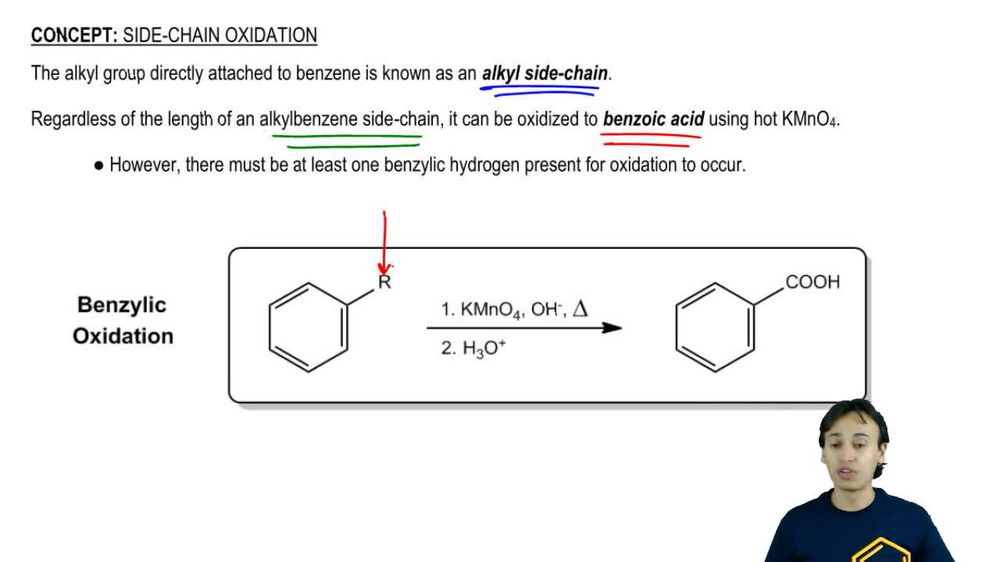
Oxidation reactions involve the loss of electrons or an increase in oxidation state, often converting alcohols into aldehydes, ketones, or carboxylic acids. For 1-butanol, oxidation can lead to the formation of butanal or butanoic acid, depending on the reaction conditions and reagents used.
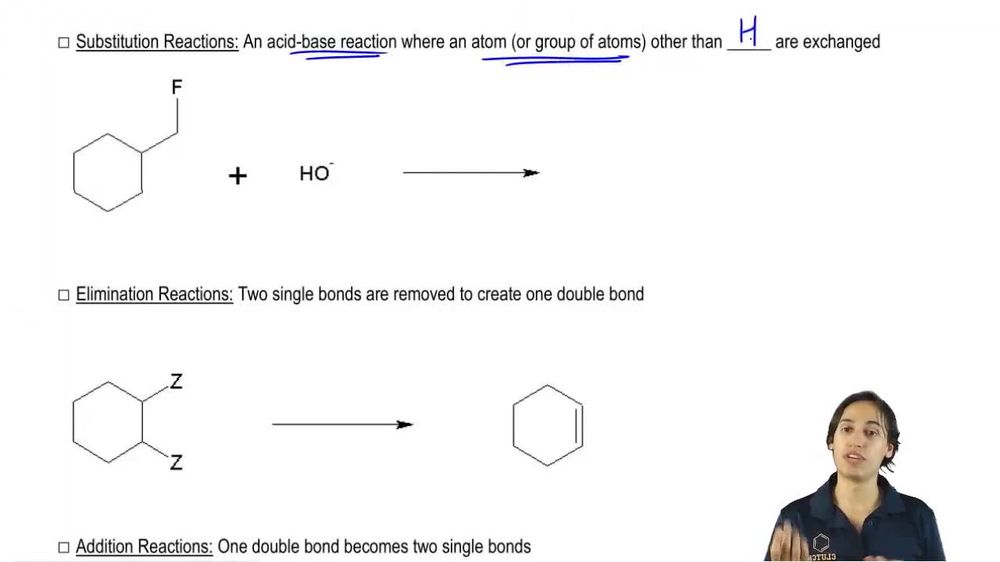
Substitution reactions occur when an atom or group in a molecule is replaced by another atom or group. In the case of 1-butanol, it can undergo substitution to form alkyl halides through reactions with halogenating agents, which is crucial for synthesizing various organic compounds from the alcohol.

 1:47 minutes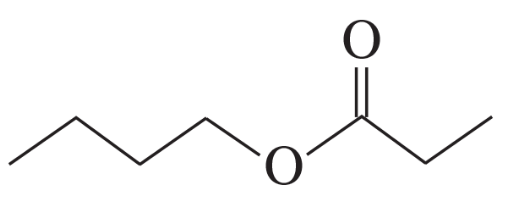
 Verified step by step guidance
 02:36
02:36