Assign each signal in the ¹³C NMR spectra to the molecule shown. (a) <IMAGE>
Verified step by step guidance
1
Identify the molecular structure of the compound provided. Look for different carbon environments, such as carbonyl carbons, aromatic carbons, or aliphatic carbons.
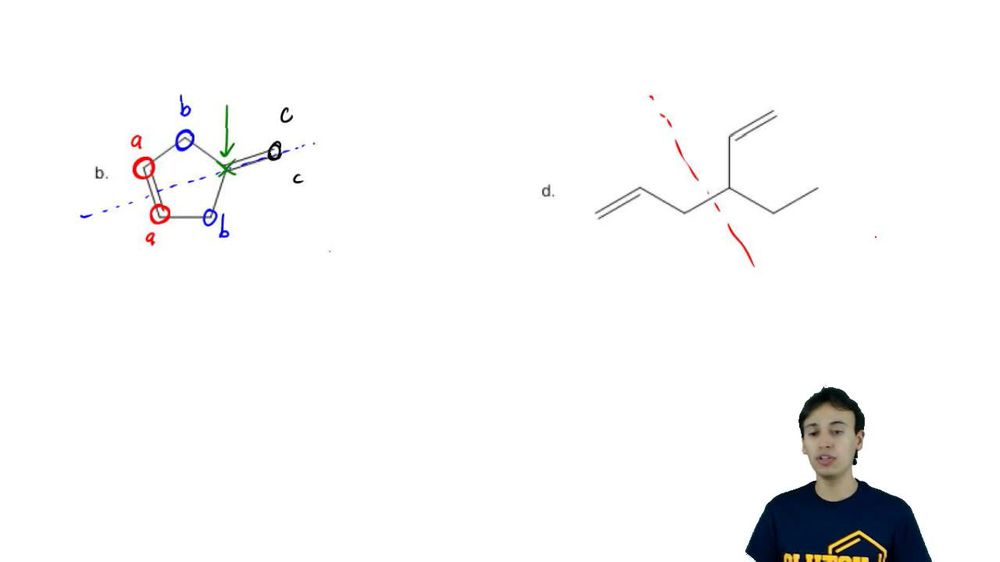
Determine the number of unique carbon environments in the molecule. Each unique environment will correspond to a distinct signal in the ¹³C NMR spectrum.
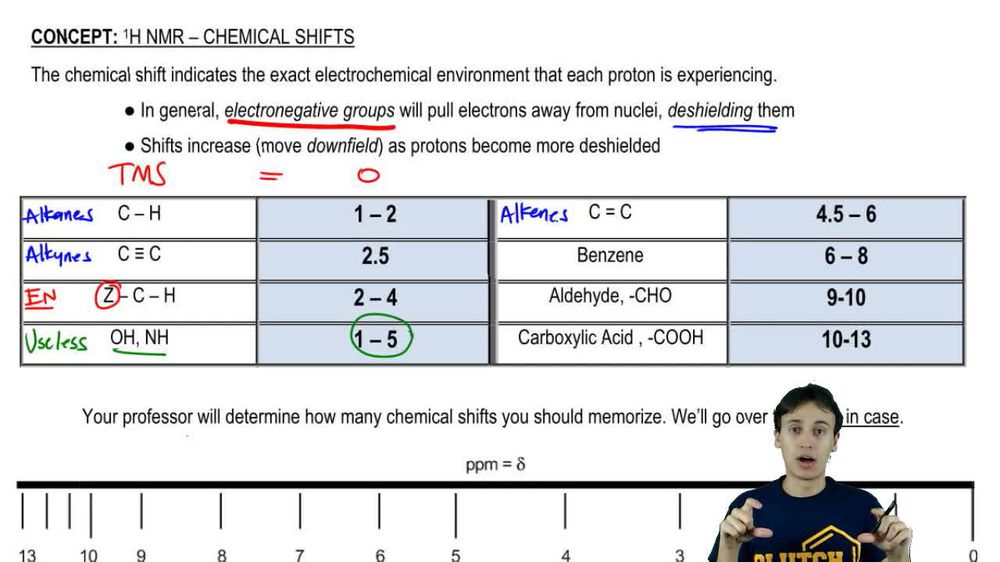
Consider the chemical shift ranges for different types of carbons: carbonyl carbons typically appear downfield (around 160-220 ppm), aromatic carbons appear between 110-160 ppm, and aliphatic carbons appear upfield (0-50 ppm).
Assign each signal in the ¹³C NMR spectrum to the corresponding carbon environment in the molecule based on the chemical shift values and the expected ranges.
Verify your assignments by considering the symmetry of the molecule and the number of signals observed. Ensure that the number of signals matches the number of unique carbon environments identified.
Verified video answer for a similar problem:
This video solution was recommended by our tutors as helpful for the problem above
Play a video:
0 Comments
Key Concepts
Here are the essential concepts you must grasp in order to answer the question correctly.
¹³C NMR Spectroscopy
¹³C NMR spectroscopy is a technique used to determine the structure of organic compounds by analyzing the carbon-13 nuclei in a molecule. Each unique carbon environment in a molecule produces a distinct signal in the NMR spectrum, allowing chemists to infer the molecular structure. The chemical shift, measured in parts per million (ppm), provides information about the electronic environment surrounding each carbon atom.
Chemical shift in NMR spectroscopy refers to the resonant frequency of a nucleus relative to a standard in a magnetic field. It is influenced by the electronic environment surrounding the nucleus, with electronegative atoms or groups causing deshielding and downfield shifts. Understanding chemical shifts helps in identifying the types of carbon atoms present in a molecule, such as alkyl, aromatic, or carbonyl carbons.
Signal assignment in ¹³C NMR involves correlating each peak in the spectrum to a specific carbon atom in the molecule. This process requires analyzing the chemical shifts and considering the molecular structure, symmetry, and the presence of functional groups. Accurate signal assignment is crucial for elucidating the complete structure of the compound and confirming its identity.

 Verified step by step guidance
 10:06
10:06