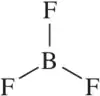
For the molecules shown, indicate the direction of the dipole moment. (b)
Verified step by step guidance
1
Step 1: Analyze the molecular structure provided. The molecule shown is carbon tetrachloride (CCl₄), which consists of a central carbon atom bonded to four chlorine atoms in a tetrahedral geometry.
Step 2: Consider the electronegativity of the atoms involved. Chlorine is more electronegative than carbon, meaning the electron density will be pulled toward the chlorine atoms in each C-Cl bond.
Step 3: Evaluate the symmetry of the molecule. Carbon tetrachloride is a symmetrical molecule, with the chlorine atoms evenly distributed around the central carbon atom in a tetrahedral arrangement.
Step 4: Determine the net dipole moment. Due to the symmetrical arrangement of the chlorine atoms, the individual dipole moments of the C-Cl bonds cancel each other out, resulting in no net dipole moment for the molecule.
Step 5: Conclude that the molecule is nonpolar. Since the dipole moments cancel out, carbon tetrachloride does not have a net dipole moment, and the direction of the dipole moment is effectively zero.
Verified video answer for a similar problem:
This video solution was recommended by our tutors as helpful for the problem above
Video duration:
5m
Play a video:
0 Comments
Key Concepts
Here are the essential concepts you must grasp in order to answer the question correctly.
Dipole Moment
A dipole moment is a vector quantity that represents the separation of positive and negative charges in a molecule. It is determined by the difference in electronegativity between atoms and the geometry of the molecule. A molecule with a dipole moment has a positive end and a negative end, indicating the direction of electron density.
Electronegativity is a measure of an atom's ability to attract and hold onto electrons within a chemical bond. In the context of carbon tetrachloride (CCl4), chlorine is more electronegative than carbon, leading to polar covalent bonds. The difference in electronegativity between carbon and chlorine contributes to the overall dipole moment of the molecule.
Molecular geometry refers to the three-dimensional arrangement of atoms in a molecule. In CCl4, the tetrahedral geometry results from the four chlorine atoms symmetrically surrounding the central carbon atom. This symmetrical arrangement causes the individual bond dipoles to cancel out, resulting in a net dipole moment of zero, making the molecule nonpolar despite the polar bonds.