Suggest an alkene that, upon reaction with the appropriate hydrohalic acid, will produce only the alkyl halide shown. [Ignore stereochemistry.] (d)
Verified step by step guidance
1
Identify the structure of the alkyl halide product. Determine the carbon chain length and the position of the halogen atom.
Recall that the addition of a hydrohalic acid (HX) to an alkene follows Markovnikov's rule, where the hydrogen atom from HX adds to the carbon with more hydrogen atoms, and the halogen adds to the carbon with fewer hydrogen atoms.
Determine the position of the double bond in the alkene that would lead to the observed alkyl halide product. The double bond should be located such that the addition of HX results in the halogen being placed on the correct carbon atom.
Consider the possible alkenes that could lead to the desired product. The alkene should have a double bond between the carbon atoms where the halogen and hydrogen will add.
Select the simplest alkene structure that fits the criteria. Ensure that the chosen alkene, when reacted with the hydrohalic acid, will yield the alkyl halide as the sole product, following the regioselectivity dictated by Markovnikov's rule.
Verified video answer for a similar problem:
This video solution was recommended by our tutors as helpful for the problem above
Video duration:
4m
Play a video:
0 Comments
Key Concepts
Here are the essential concepts you must grasp in order to answer the question correctly.
Markovnikov's Rule
Markovnikov's Rule states that in the addition of a protic acid (HX) to an alkene, the hydrogen atom from the acid will attach to the carbon with the greater number of hydrogen atoms, while the halide (X) will attach to the carbon with fewer hydrogen atoms. This rule helps predict the major product in hydrohalogenation reactions.
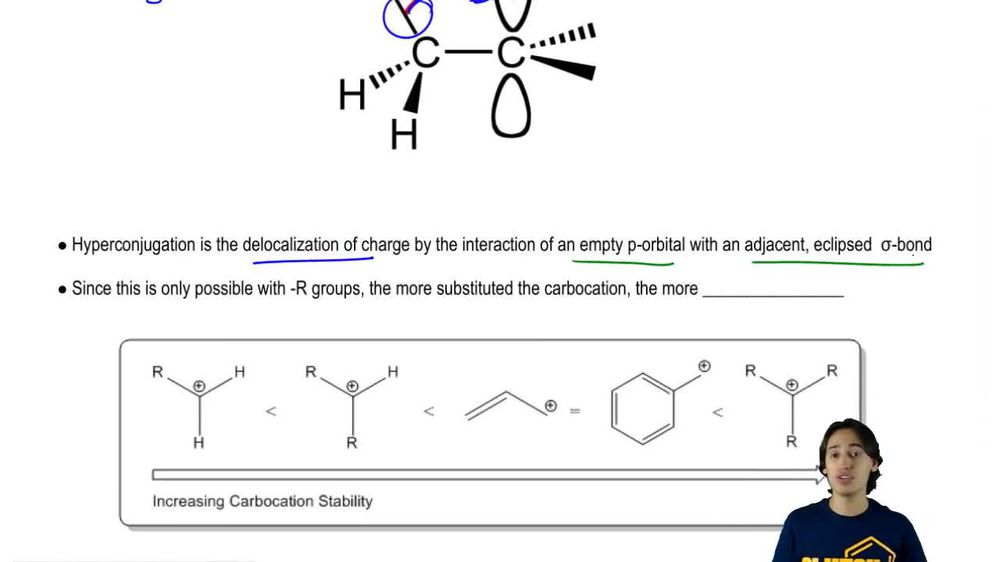
Carbocation stability is crucial in determining the outcome of reactions involving alkenes and hydrohalic acids. More substituted carbocations (tertiary > secondary > primary) are more stable due to hyperconjugation and inductive effects. This stability influences the pathway and the final product of the reaction.
Regioselectivity refers to the preference of one direction of chemical bond making or breaking over all other possible directions. In the context of alkene reactions with hydrohalic acids, regioselectivity determines which carbon atom the halogen will attach to, guided by factors like Markovnikov's Rule and carbocation stability.

 4:26 minutes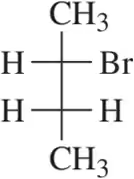
 Verified step by step guidance
 03:54
03:54