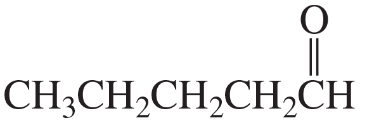
How could the following compounds be synthesized from acetylene? e.
Verified step by step guidance
1
Step 1: Begin with acetylene (C≡CH) as the starting material. Acetylene is a versatile precursor in organic synthesis due to its triple bond, which can undergo various reactions to form longer carbon chains.
Step 2: Perform a chain elongation reaction using alkylation. Treat acetylene with sodium amide (NaNH₂) to generate the acetylide ion (C≡C⁻). Then, react the acetylide ion with an alkyl halide, such as 1-bromopropane (CH₃CH₂CH₂Br), to form a longer alkyne chain (CH₃CH₂CH₂C≡CH).
Step 3: Hydrogenate the alkyne partially to form an alkene. Use a Lindlar catalyst to selectively reduce the triple bond to a cis-alkene (CH₃CH₂CH₂CH=CH₂). This step ensures the compound retains unsaturation for further functionalization.
Step 4: Perform hydroboration-oxidation to convert the alkene into an alcohol. React the alkene (CH₃CH₂CH₂CH=CH₂) with BH₃·THF followed by oxidation with hydrogen peroxide (H₂O₂) in a basic medium (NaOH). This yields a primary alcohol (CH₃CH₂CH₂CH₂CH₂OH).
Step 5: Oxidize the alcohol to a ketone. Use an oxidizing agent such as PCC (Pyridinium Chlorochromate) or Jones reagent (CrO₃/H₂SO₄) to convert the alcohol (CH₃CH₂CH₂CH₂CH₂OH) into the desired ketone (CH₃CH₂CH₂CH₂CO).
Verified video answer for a similar problem:
This video solution was recommended by our tutors as helpful for the problem above
Video duration:
6m
Play a video:
0 Comments
Key Concepts
Here are the essential concepts you must grasp in order to answer the question correctly.
Acetylene Reactivity
Acetylene (C2H2) is a highly reactive alkyne that can undergo various reactions, including addition reactions with electrophiles. Understanding its reactivity is crucial for synthesizing more complex compounds. The triple bond in acetylene can be broken to form new bonds with other atoms or groups, allowing for the construction of diverse organic molecules.
Functional groups are specific groups of atoms within molecules that determine their chemical reactivity. In organic synthesis, transforming one functional group into another is a common strategy. Recognizing how to manipulate functional groups during the synthesis process is essential for creating the desired compounds from acetylene.
Synthetic pathways refer to the series of chemical reactions that lead to the formation of a target compound from starting materials. In the context of synthesizing compounds from acetylene, it is important to identify the appropriate sequence of reactions, including any necessary reagents and conditions, to achieve the desired transformation efficiently.