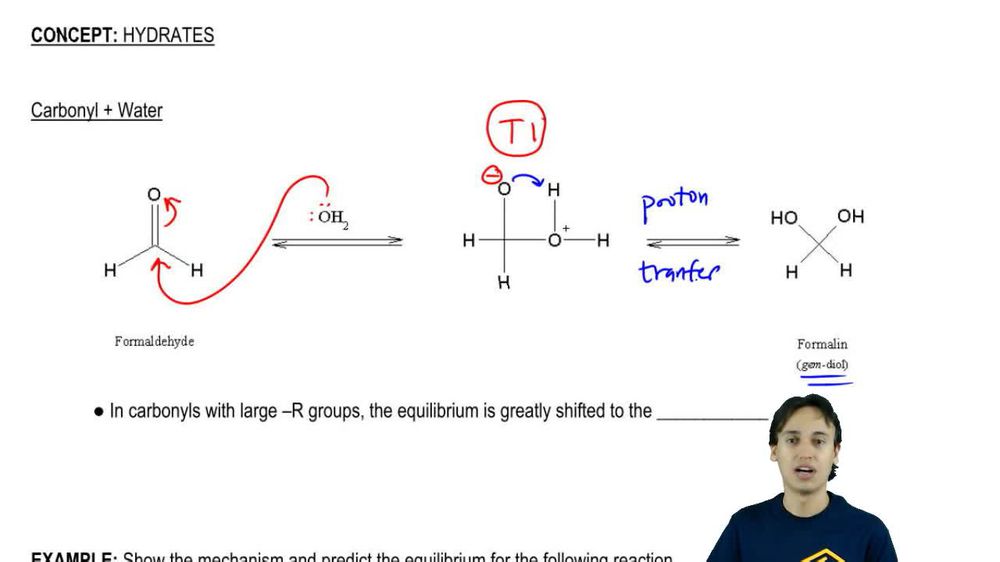
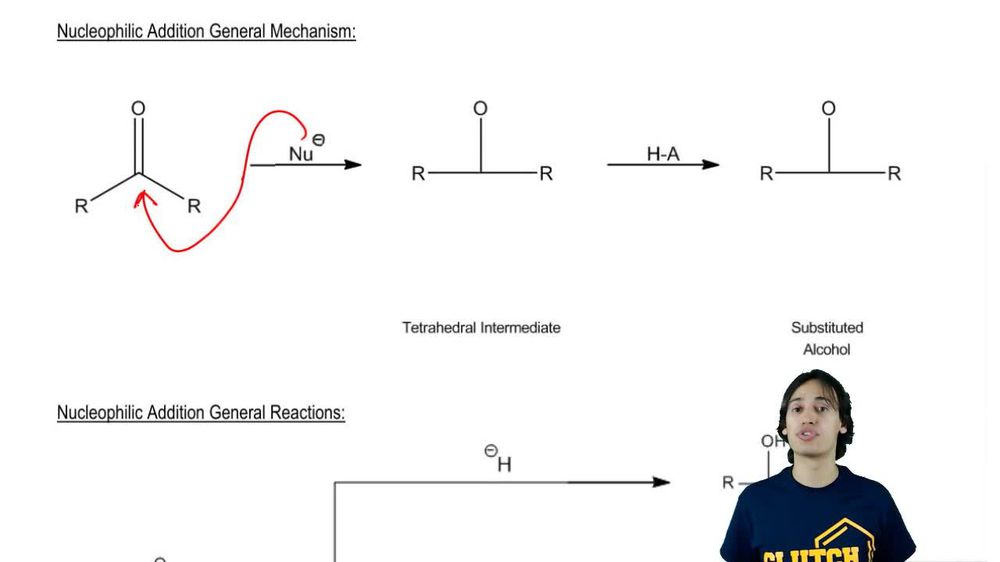
Show how you would synthesize the following primary alcohol by adding an appropriate Grignard reagent to formaldehyde. (c)
Verified step by step guidance
1
Step 1: Identify the target molecule, which is a primary alcohol attached to a cyclopentyl group. The synthesis involves using a Grignard reagent and formaldehyde.
Step 2: Select the appropriate Grignard reagent. To form the cyclopentyl group, the Grignard reagent should be cyclopentyl magnesium bromide (C5H9MgBr). This reagent is prepared by reacting cyclopentyl bromide (C5H9Br) with magnesium in dry ether.
Step 3: React the Grignard reagent with formaldehyde (HCHO). The nucleophilic carbon in the Grignard reagent attacks the electrophilic carbon of the formaldehyde, forming a new carbon-carbon bond.
Step 4: After the addition reaction, the intermediate formed is an alkoxide ion. This intermediate is then protonated by adding water or dilute acid during the work-up step to yield the primary alcohol.
Step 5: Verify the structure of the product. The final product should be cyclopentylmethanol (C5H9CH2OH), which matches the target molecule shown in the image.
Verified video answer for a similar problem:
This video solution was recommended by our tutors as helpful for the problem above
Video duration:
2m
Play a video:
0 Comments
Key Concepts
Here are the essential concepts you must grasp in order to answer the question correctly.
Grignard Reagents
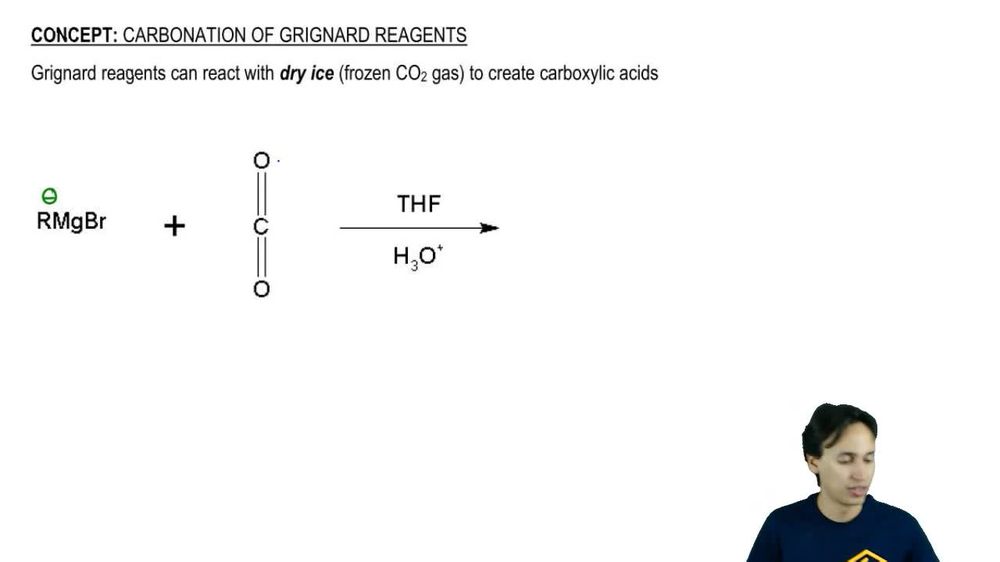
Grignard reagents are organomagnesium compounds represented as R-MgX, where R is an organic group and X is a halogen. They are highly reactive and serve as nucleophiles in organic synthesis, allowing for the formation of carbon-carbon bonds. When reacted with carbonyl compounds like formaldehyde, they can lead to the formation of alcohols through nucleophilic addition.
Formaldehyde is the simplest aldehyde, with the chemical formula CH2O. It is a highly reactive carbonyl compound that can undergo nucleophilic addition reactions. When a Grignard reagent is added to formaldehyde, it results in the formation of a primary alcohol after subsequent hydrolysis, making it a key step in alcohol synthesis.
Nucleophilic addition is a fundamental reaction mechanism in organic chemistry where a nucleophile attacks an electrophilic carbon atom, typically in a carbonyl group. This process leads to the formation of a new bond and is crucial in the synthesis of alcohols from aldehydes and ketones. Understanding this mechanism is essential for predicting the products of reactions involving Grignard reagents and carbonyl compounds.

 2:45 minutes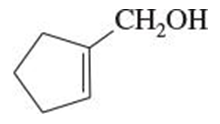
 Verified step by step guidance
 02:12
02:12