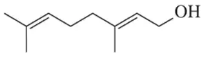
Draw the product(s) you'd expect when each of these alkenes is treated first with O3, then with CH3SCH3 (d)
Verified step by step guidance
1
Identify the alkenes in the given structure. In the image, there are two double bonds present in the molecule.
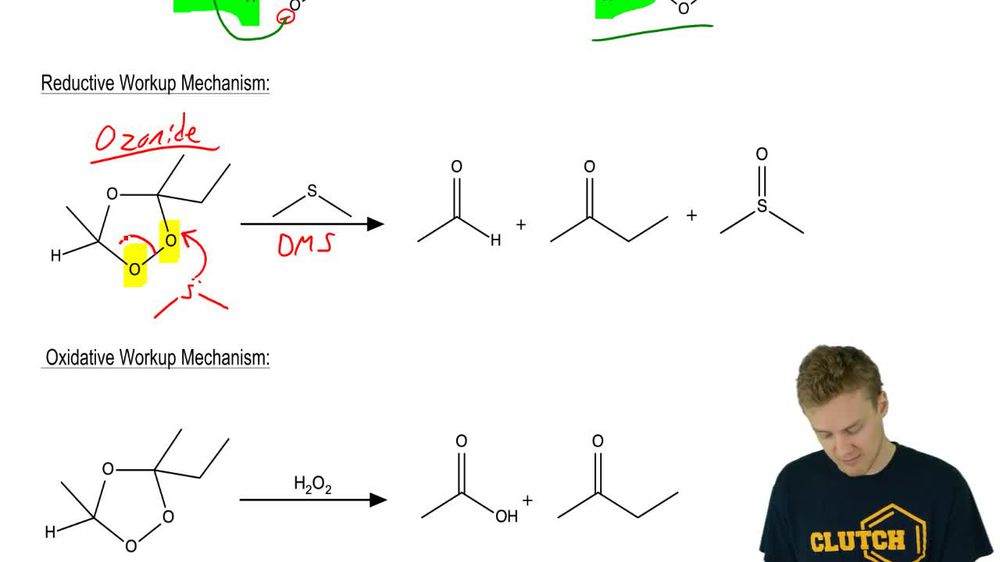
Understand the reaction conditions: Ozonolysis involves the reaction of alkenes with ozone (O₃) followed by a reductive workup with dimethyl sulfide (CH₃SCH₃). This process cleaves the double bonds and forms carbonyl compounds.
For each alkene, draw the ozonolysis intermediate, which is a molozonide that rearranges to an ozonide. However, for simplicity, focus on the final products after reductive workup.
Determine the products formed from each double bond. The first double bond will be cleaved to form two carbonyl compounds, typically aldehydes or ketones, depending on the substituents attached to the double bond.
Repeat the process for the second double bond. Draw the carbonyl compounds formed from the cleavage of the second double bond. Ensure to consider the position of the hydroxyl group in the molecule, as it may affect the final product structure.
Verified video answer for a similar problem:
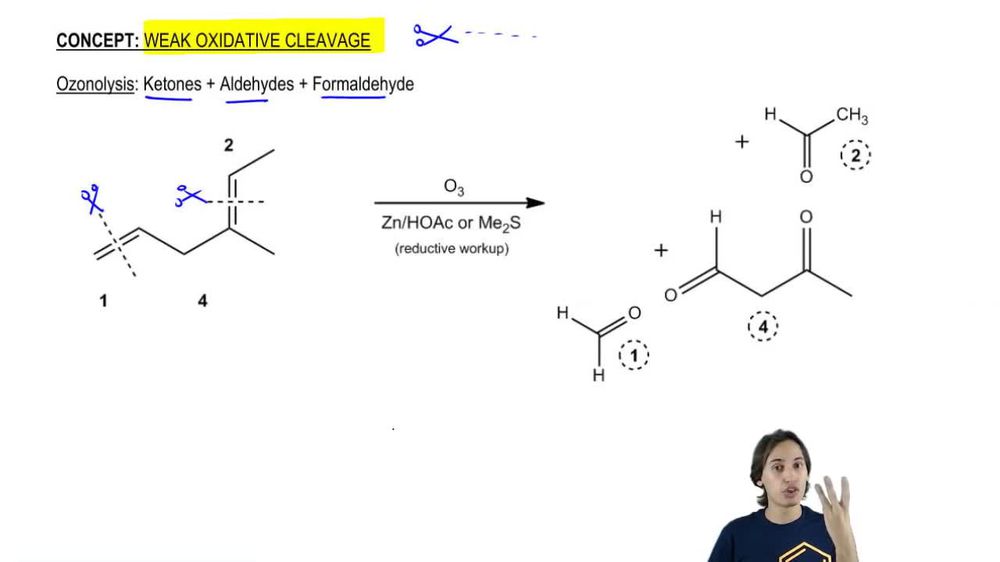
This video solution was recommended by our tutors as helpful for the problem above
Play a video:
0 Comments
Key Concepts
Here are the essential concepts you must grasp in order to answer the question correctly.
Ozonolysis
Ozonolysis is a reaction where ozone (O₃) cleaves alkenes to form carbonyl compounds. The process involves the formation of an ozonide intermediate, which is then reduced to yield aldehydes or ketones. In this question, the alkene undergoes ozonolysis, breaking the double bonds and forming carbonyl groups at the cleavage sites.
Reductive workup is a step following ozonolysis where a reducing agent, such as dimethyl sulfide (CH₃SCH₃), is used to convert ozonides into stable carbonyl compounds. This step prevents the formation of carboxylic acids, ensuring that aldehydes or ketones are the final products. In this scenario, CH₃SCH₃ is used to achieve this transformation.
Understanding the structure of the alkene is crucial for predicting the ozonolysis products. The given alkene has two double bonds, which will be cleaved during ozonolysis. Each cleavage results in the formation of carbonyl compounds, and the presence of an alcohol group may influence the stability and reactivity of the resulting products.