How many valence shell electrons do each of the following elements contain? How many new bonds can each form? (b) N
Verified step by step guidance
1
Step 1: Identify the group number of nitrogen (N) in the periodic table. Nitrogen is in Group 15 (or Group V in older notation). The group number indicates the number of valence electrons for main group elements.
Step 2: Determine the number of valence electrons for nitrogen. Since nitrogen is in Group 15, it has 5 valence electrons in its outermost shell.
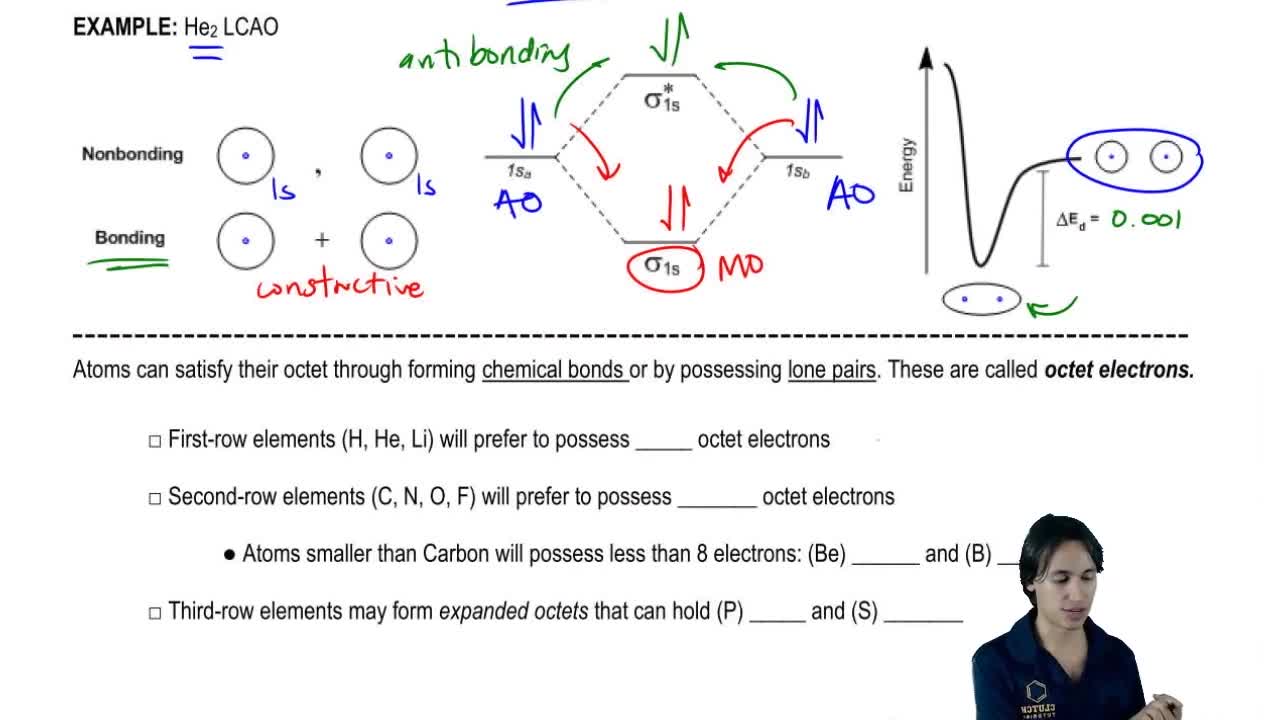
Step 3: Understand the bonding capacity of nitrogen. To achieve a stable octet configuration (8 electrons in the valence shell), nitrogen can form bonds to gain 3 additional electrons.
Step 4: Calculate the number of bonds nitrogen can form. Since nitrogen has 5 valence electrons and needs 3 more to complete its octet, it can form up to 3 covalent bonds.
Step 5: Summarize the findings. Nitrogen has 5 valence electrons and can form 3 new bonds to achieve a stable octet configuration.
Verified video answer for a similar problem:
This video solution was recommended by our tutors as helpful for the problem above
Video duration:
4m
Play a video:
0 Comments
Key Concepts
Here are the essential concepts you must grasp in order to answer the question correctly.
Valence Electrons
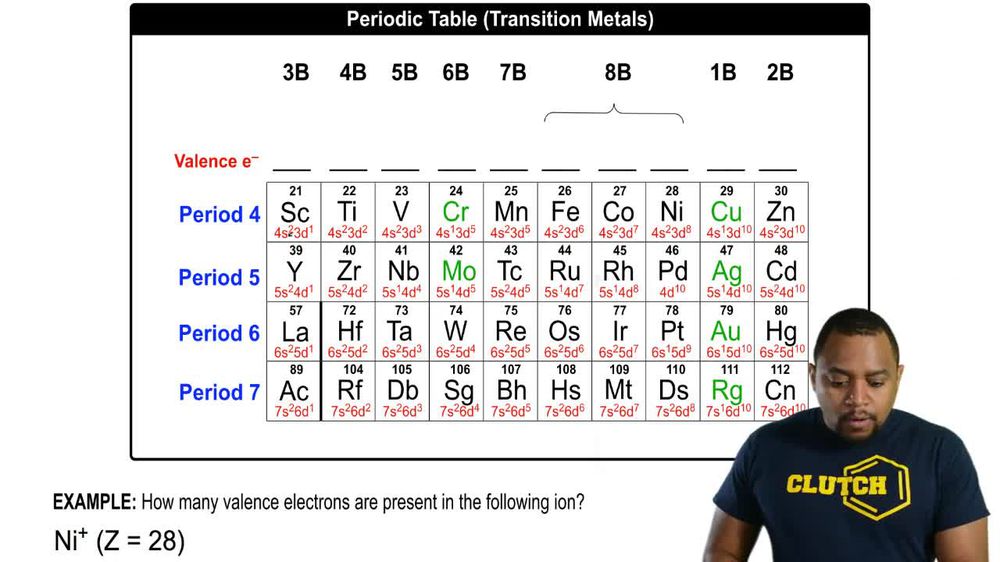
Valence electrons are the electrons located in the outermost shell of an atom. They play a crucial role in chemical bonding, as they are the electrons involved in forming bonds with other atoms. For nitrogen (N), which is in group 15 of the periodic table, there are five valence electrons.
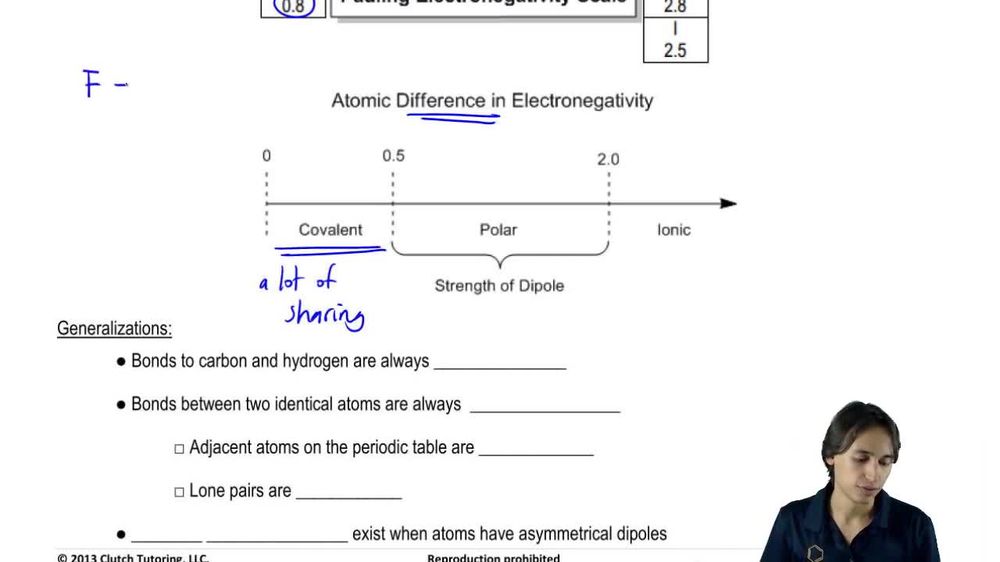
Covalent bonds are formed when two atoms share one or more pairs of valence electrons. The number of covalent bonds an atom can form is determined by the number of unpaired valence electrons it has. In the case of nitrogen, it can form three covalent bonds by sharing its three unpaired valence electrons.
Differences between ionic, polar and covalent bonds
Octet Rule
The octet rule is a chemical principle that states atoms tend to bond in such a way that they each have eight electrons in their valence shell, achieving a stable electron configuration. For nitrogen, which has five valence electrons, it needs three more to complete its octet, thus allowing it to form three bonds with other atoms.