For each pair, choose the haloalkane that would react most quickly in an SN1 or E1 reaction. (b)
Verified step by step guidance
1
Step 1: Understand the reaction mechanism. SN1 and E1 reactions proceed via a carbocation intermediate. The stability of the carbocation formed after the leaving group departs is a key factor in determining the rate of the reaction.
Step 2: Analyze the first haloalkane (cyclohexyl iodide). When the iodine leaves, it forms a secondary carbocation. Secondary carbocations are moderately stable, but not as stable as tertiary carbocations.
Step 3: Analyze the second haloalkane (cyclohexyl iodide with a double bond and methyl group). When the iodine leaves, it forms an allylic carbocation. Allylic carbocations are stabilized by resonance, making them more stable than secondary carbocations.
Step 4: Compare the stability of the carbocations formed. The allylic carbocation formed from the second haloalkane is more stable due to resonance stabilization, which increases the rate of SN1 and E1 reactions.
Step 5: Conclude that the second haloalkane (with the double bond and methyl group) will react more quickly in an SN1 or E1 reaction because the carbocation intermediate is more stable.
Verified video answer for a similar problem:
This video solution was recommended by our tutors as helpful for the problem above
Video duration:
2m
Play a video:
0 Comments
Key Concepts
Here are the essential concepts you must grasp in order to answer the question correctly.
Sₙ1 and E1 Reactions
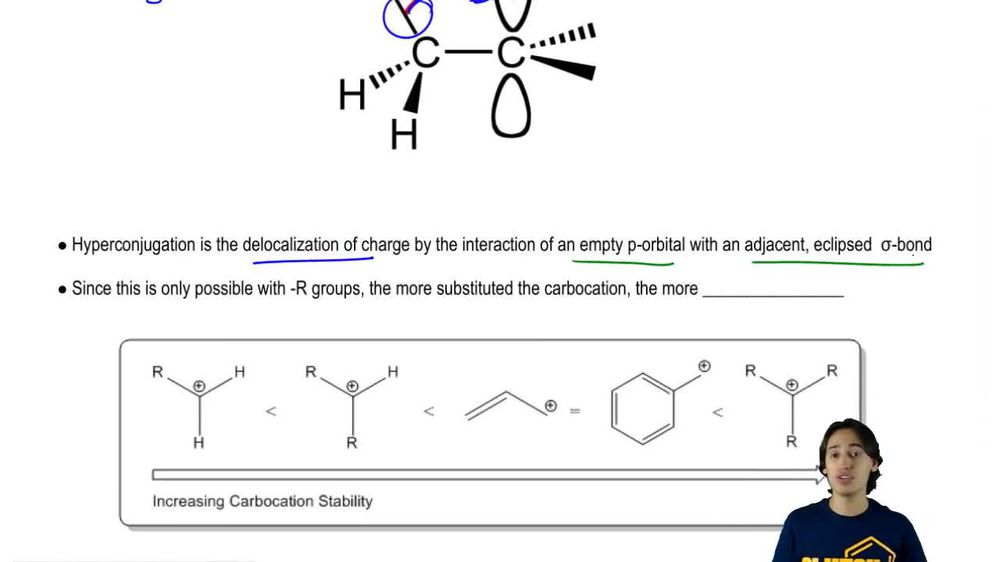
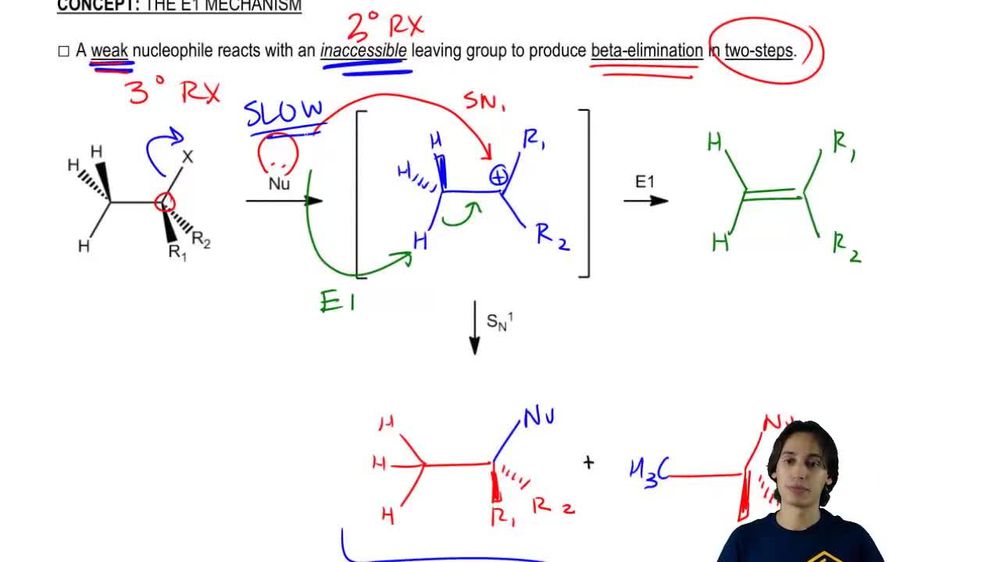
Sₙ1 (nucleophilic substitution unimolecular) and E1 (elimination unimolecular) reactions are two types of reactions that involve a two-step mechanism. In Sₙ1 reactions, the rate-determining step is the formation of a carbocation intermediate, while in E1 reactions, the same intermediate is formed before the elimination of a leaving group. Both reactions are favored by tertiary haloalkanes due to their ability to stabilize the carbocation.
Carbocation stability is a crucial factor in determining the rate of Sₙ1 and E1 reactions. Tertiary carbocations are more stable than secondary or primary ones due to hyperconjugation and inductive effects from surrounding alkyl groups. The more stable the carbocation, the faster the reaction will proceed, making the structure of the haloalkane significant in predicting reactivity.
The ability of a leaving group to depart from the haloalkane is essential in both Sₙ1 and E1 reactions. Good leaving groups, such as iodide or bromide, can stabilize the transition state and facilitate the formation of the carbocation. The strength of the leaving group can significantly influence the reaction rate, with weaker bases generally being better leaving groups.

 2:49 minutes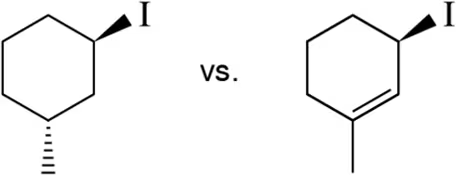
 Verified step by step guidance
 03:32
03:32