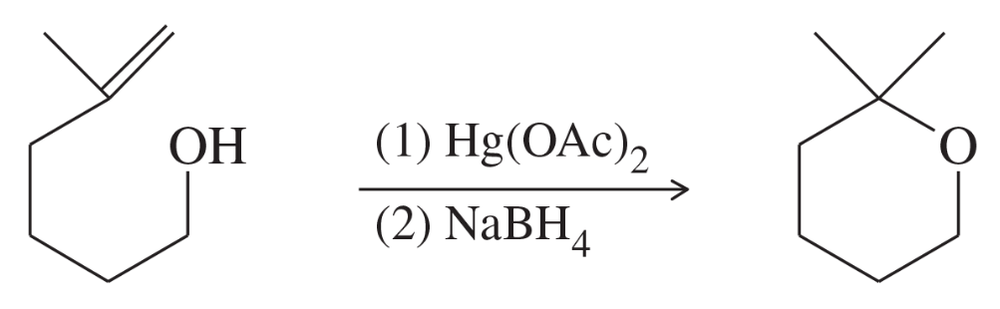
Predict the product of formula C7H13BrO from the reaction of this same unsaturated alcohol with bromine. Propose a mechanism to support your prediction.
Verified step by step guidance
1
Step 1: Analyze the structure of the given unsaturated alcohol. The molecule contains a double bond (C=C) and a hydroxyl group (-OH). The double bond is the reactive site for bromine addition.
Step 2: Recall the reaction mechanism for bromine addition to alkenes. Bromine (Br2) reacts with the double bond via an electrophilic addition mechanism. The π-electrons of the double bond attack the bromine molecule, forming a bromonium ion intermediate.
Step 3: Propose the mechanism. The bromine molecule approaches the double bond, and one bromine atom becomes electrophilic. The π-electrons of the double bond attack this bromine atom, leading to the formation of a cyclic bromonium ion intermediate.
Step 4: Explain the nucleophilic attack. The second bromine atom (Br⁻) acts as a nucleophile and attacks the more substituted carbon of the bromonium ion, leading to the anti-addition of bromine across the double bond.
Step 5: Predict the product. The final product will be a dibromo compound with the bromine atoms added anti to each other across the double bond. The hydroxyl group (-OH) remains unchanged in the molecule.
Verified video answer for a similar problem:
This video solution was recommended by our tutors as helpful for the problem above
Video duration:
7m
Play a video:
0 Comments
Key Concepts
Here are the essential concepts you must grasp in order to answer the question correctly.
Unsaturated Alcohols
Unsaturated alcohols contain one or more carbon-carbon double bonds (alkenes) along with a hydroxyl (-OH) group. The presence of the double bond makes them reactive, particularly in electrophilic addition reactions. Understanding the structure and reactivity of unsaturated alcohols is crucial for predicting the products of their reactions, such as with bromine.
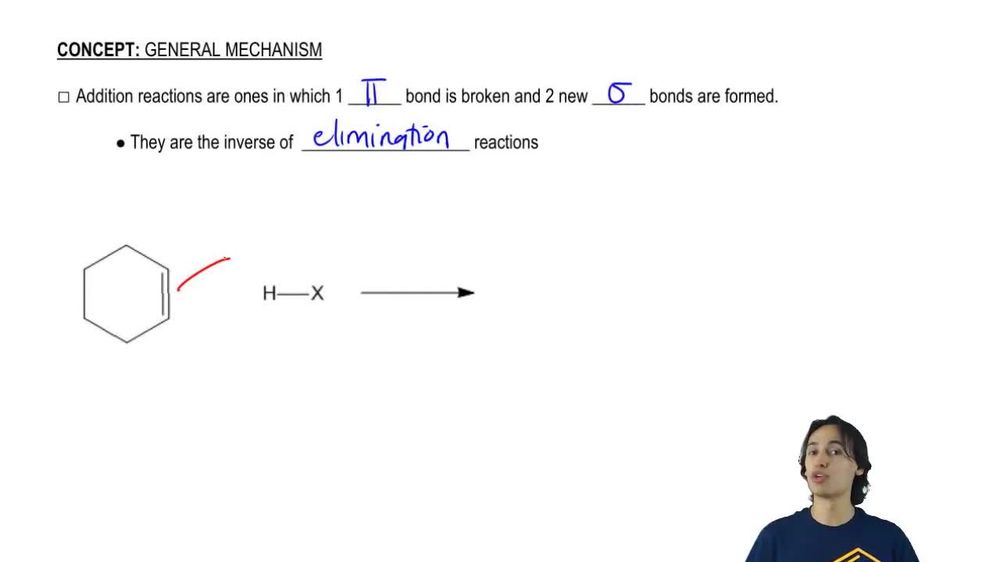
The difference between saturated and unsaturated molecules.
Electrophilic Addition Mechanism
The electrophilic addition mechanism involves the reaction of an electrophile with a nucleophile, leading to the formation of a more saturated product. In the case of bromine reacting with an unsaturated alcohol, the double bond acts as a nucleophile, attacking the bromine molecule, which results in the formation of a bromonium ion intermediate. This step is essential for understanding how the final product is formed.
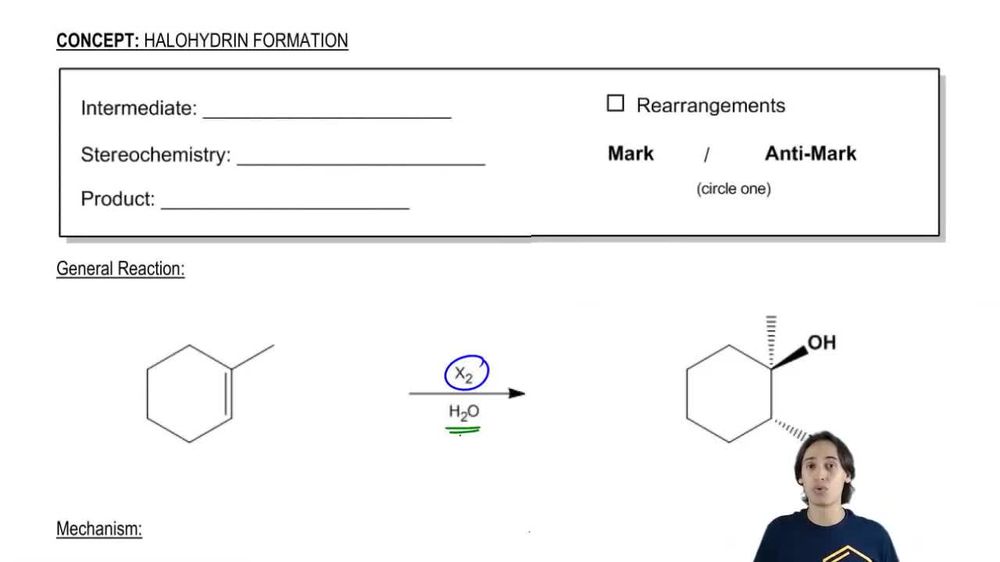
Halohydrin formation occurs when an alkene reacts with a halogen (like bromine) in the presence of water or an alcohol, resulting in the addition of both a halogen and a hydroxyl group across the double bond. This reaction typically proceeds through a bromonium ion intermediate, leading to the formation of a product that contains both a halogen and an alcohol functional group, which is relevant for predicting the product of the given reaction.