Predict the major products of the following reactions. (a) ethyl tosylate + potassium tert-butoxide (b) isobutyl tosylate + NaI (c) (R)-2-hexyl tosylate + NaCN
Verified step by step guidance
1
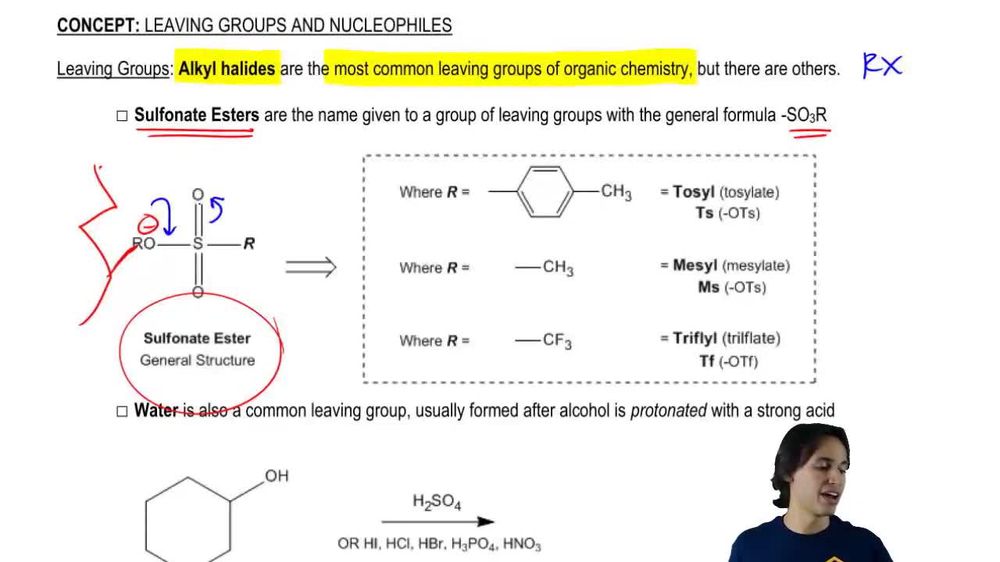
Step 1: Analyze the structure of the reactants and identify the functional groups. Ethyl tosylate (a), isobutyl tosylate (b), and (R)-2-hexyl tosylate (c) all contain a tosylate group (-OTs), which is a good leaving group. The reagents provided (potassium tert-butoxide, NaI, and NaCN) suggest different reaction mechanisms.
Step 2: For reaction (a), ethyl tosylate + potassium tert-butoxide: Potassium tert-butoxide is a strong base and sterically hindered, favoring an E2 elimination mechanism. The tosylate group will leave, and a double bond will form between the alpha and beta carbons of the ethyl group.
Step 3: For reaction (b), isobutyl tosylate + NaI: Sodium iodide (NaI) provides iodide ions, which are good nucleophiles. This reaction likely proceeds via an SN2 mechanism due to the primary nature of the carbon attached to the tosylate group. The iodide ion will attack the carbon bonded to the tosylate group, displacing the tosylate and forming isobutyl iodide.
Step 4: For reaction (c), (R)-2-hexyl tosylate + NaCN: Sodium cyanide (NaCN) provides cyanide ions, which are strong nucleophiles. This reaction will proceed via an SN2 mechanism because the carbon attached to the tosylate group is secondary. The cyanide ion will attack the carbon bonded to the tosylate group, displacing the tosylate and forming (R)-2-hexyl cyanide. The stereochemistry will invert due to the backside attack characteristic of SN2 reactions.
Step 5: Summarize the major products: (a) an alkene (ethyl tosylate undergoes elimination), (b) isobutyl iodide (SN2 substitution), and (c) (S)-2-hexyl cyanide (SN2 substitution with inversion of configuration).
Verified video answer for a similar problem:
This video solution was recommended by our tutors as helpful for the problem above
Video duration:
7m
Play a video:
0 Comments
Key Concepts
Here are the essential concepts you must grasp in order to answer the question correctly.
Tosylates
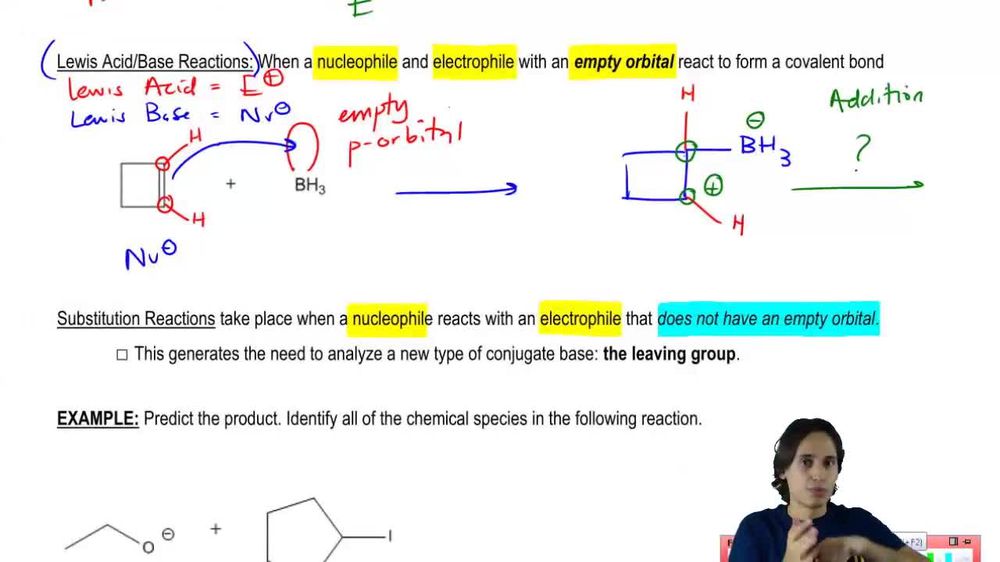
Tosylates are derivatives of alcohols where the hydroxyl group (-OH) is replaced by a tosyl group (-OTs). This transformation enhances the leaving ability of the group, making tosylates excellent substrates for nucleophilic substitution reactions. The presence of the tosyl group stabilizes the leaving group, facilitating reactions such as SN2 and SN1 mechanisms.
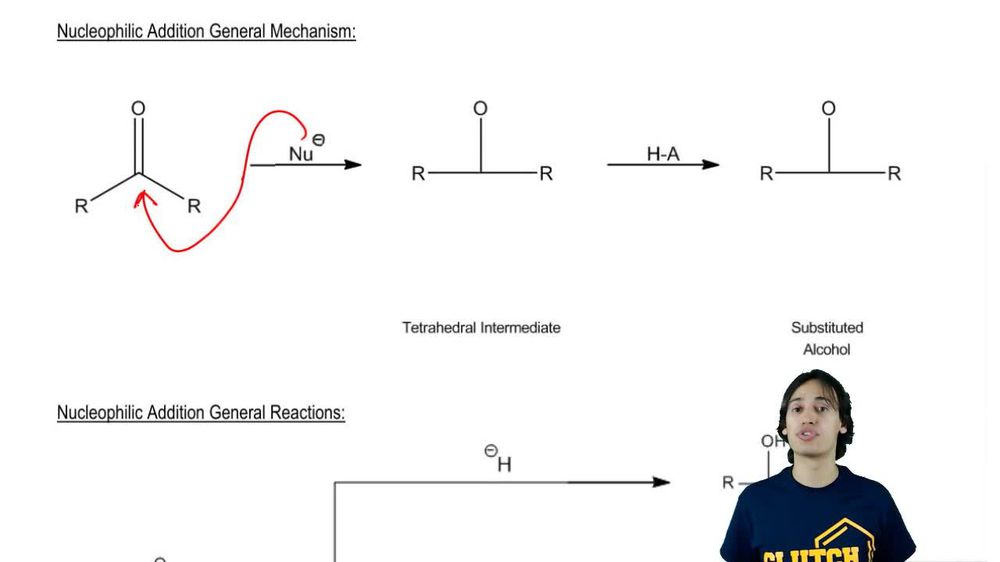
Nucleophilic substitution reactions involve the replacement of a leaving group by a nucleophile. In SN2 reactions, the nucleophile attacks the electrophilic carbon simultaneously as the leaving group departs, leading to a concerted mechanism. In contrast, SN1 reactions involve the formation of a carbocation intermediate, followed by nucleophilic attack. The choice between these mechanisms depends on factors like substrate structure and nucleophile strength.
Nucleophiles and Electrophiles can react in Substitution Reactions.
Sterics and Nucleophilicity
Steric hindrance refers to the spatial arrangement of atoms that can impede the approach of nucleophiles to the electrophilic center. In reactions involving bulky nucleophiles, such as potassium tert-butoxide, sterics can favor elimination over substitution. Conversely, less hindered nucleophiles, like iodide or cyanide, are more likely to participate in SN2 reactions, leading to different product outcomes based on the substrate's structure.

 7:33 minutes
 Verified step by step guidance
 07:22
07:22