Rank the compounds in each of the following groups from strongest acid to weakest acid: a.
Verified step by step guidance
1
Step 1: Identify the functional groups in each compound. Compound (a) contains a terminal alkyne group (-C≡CH), compound (b) is an alkane with no acidic hydrogen, compound (c) contains a carbonyl group (aldehyde), and compound (d) contains a terminal alkyne group (-C≡CH).
Step 2: Recall the general trend in acidity. Terminal alkynes are more acidic than alkanes due to the sp-hybridized carbon, which stabilizes the conjugate base. Aldehydes are less acidic than terminal alkynes but more acidic than alkanes.
Step 3: Compare the acidity of the compounds based on their functional groups. Terminal alkynes (a and d) are expected to be the most acidic, followed by the aldehyde (c), and finally the alkane (b), which is the least acidic.
Step 4: Consider the inductive effects and hybridization. The sp-hybridized carbon in terminal alkynes contributes to their acidity, while the sp3-hybridized carbons in alkanes make them the least acidic. The carbonyl group in aldehydes contributes to moderate acidity due to resonance stabilization of the conjugate base.
Step 5: Rank the compounds from strongest acid to weakest acid based on the analysis: (a) ≈ (d) > (c) > (b).
Verified video answer for a similar problem:
This video solution was recommended by our tutors as helpful for the problem above
Video duration:
4m
Play a video:
0 Comments
Key Concepts
Here are the essential concepts you must grasp in order to answer the question correctly.
Acidity in Organic Compounds
Acidity in organic chemistry refers to the ability of a compound to donate a proton (H+). The strength of an acid is influenced by the stability of its conjugate base; the more stable the conjugate base, the stronger the acid. Factors affecting acidity include electronegativity, resonance, and hybridization of the atom bearing the acidic proton.
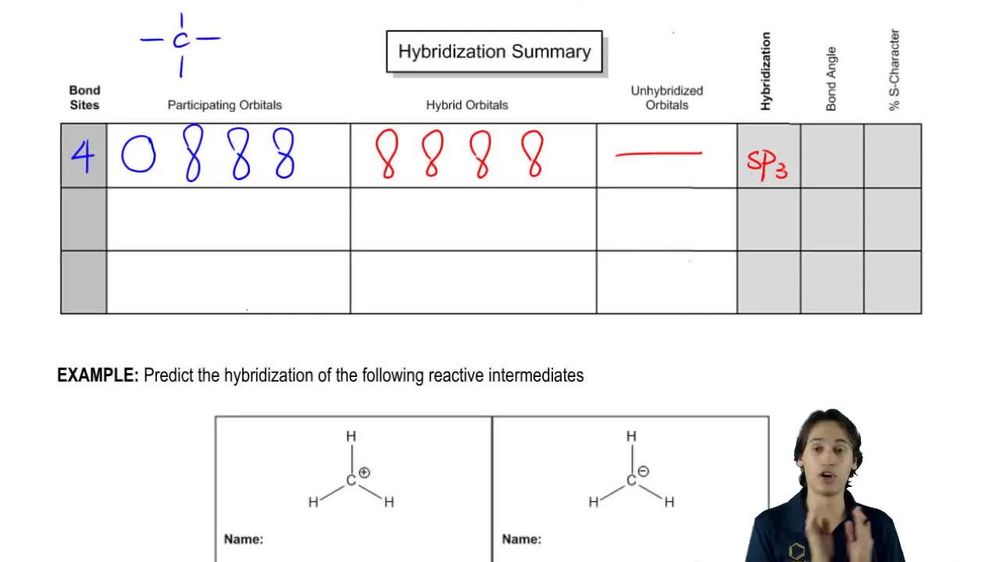
The hybridization of the carbon atom attached to the acidic hydrogen significantly affects acidity. sp-hybridized carbons (as in alkynes) are more acidic than sp2 (alkenes) and sp3 (alkanes) because the greater s-character in sp hybridization leads to a more stable conjugate base. This stability arises from the closer proximity of the negative charge to the nucleus in sp-hybridized carbons.
Resonance stabilization occurs when a compound can delocalize electrons across multiple structures, enhancing stability. In the context of acidity, if the conjugate base can be stabilized by resonance, the original compound is a stronger acid. For example, carboxylic acids exhibit resonance stabilization, making them stronger acids compared to alkenes or alkynes without such stabilization.

 4:05 minutes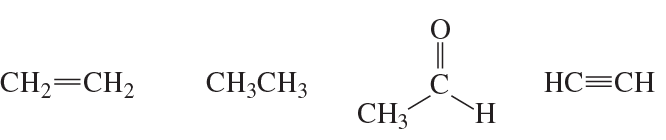
 Verified step by step guidance
 01:40
01:40