Draw the resonance contributors for the following radicals: c.
Verified step by step guidance
1
Identify the radical in the structure. The radical is located on the carbon atom adjacent to the cyclohexane ring. This carbon is part of an allylic system, meaning it is adjacent to a double bond, which allows for resonance stabilization.
Recognize that resonance contributors involve the movement of electrons. In this case, the unpaired electron on the radical can interact with the π-electrons of the double bond to form resonance structures.
Draw the first resonance structure by moving the π-electrons of the double bond towards the radical carbon. This creates a new double bond between the radical carbon and the adjacent carbon, while the original double bond shifts to the next carbon-carbon bond.
Draw the second resonance structure by moving the π-electrons of the new double bond further along the chain. This creates a double bond between the next two carbons, while the unpaired electron shifts to the terminal carbon of the chain.
Verify that all resonance contributors follow the rules of resonance: the overall charge and number of electrons remain the same, and the unpaired electron is delocalized across the π-system, providing stabilization to the radical.
Verified video answer for a similar problem:
This video solution was recommended by our tutors as helpful for the problem above
Video duration:
5m
Play a video:
0 Comments
Key Concepts
Here are the essential concepts you must grasp in order to answer the question correctly.
Resonance Structures
Resonance structures are different Lewis structures for the same molecule that depict the same arrangement of atoms but differ in the placement of electrons. These structures help illustrate the delocalization of electrons within a molecule, which can stabilize the overall structure. Understanding resonance is crucial for predicting the reactivity and stability of radicals and other reactive intermediates.
Radicals are species that contain an unpaired electron, making them highly reactive. They can be formed through various processes, including homolytic bond cleavage. In the context of resonance, radicals can have multiple resonance contributors, which can influence their stability and reactivity, making it essential to analyze all possible structures.
Electron delocalization refers to the distribution of electrons across multiple atoms in a molecule, rather than being localized between two atoms. This phenomenon is a key feature of resonance and contributes to the stability of radicals and other intermediates. Recognizing how electrons can be shared among different atoms helps in drawing accurate resonance contributors and understanding the overall behavior of the molecule.

 5:40 minutes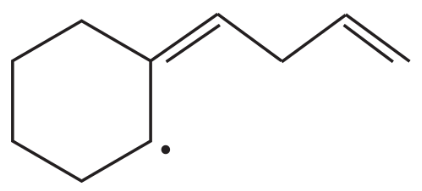
 Verified step by step guidance
 03:04
03:04