Using any alkene and any other reagents, how would you prepare the following compounds? f.
Verified step by step guidance
1
Step 1: Identify the target molecule. The compound has a bromine (Br) and chlorine (Cl) attached to adjacent carbons in a six-carbon chain. This suggests a halogenation reaction involving an alkene.
Step 2: Choose an appropriate alkene. The target molecule can be derived from 2-hexene (CH3CH2CH=CHCH2CH3), which has a double bond between the second and third carbons.
Step 3: Select reagents for halogenation. To add bromine and chlorine across the double bond, use a mixture of Br2 and Cl2 in a non-polar solvent like CCl4. This will result in anti-addition of the halogens across the double bond.
Step 4: Predict the stereochemistry. The halogenation reaction proceeds via anti-addition, meaning the bromine and chlorine will add to opposite faces of the alkene, forming the desired product.
Step 5: Verify the product. After the reaction, the product should match the structure of the target molecule, with bromine and chlorine on adjacent carbons in the correct positions.
Verified video answer for a similar problem:
This video solution was recommended by our tutors as helpful for the problem above
Video duration:
5m
Play a video:
0 Comments
Key Concepts
Here are the essential concepts you must grasp in order to answer the question correctly.
Alkene Reactivity
Alkenes are unsaturated hydrocarbons characterized by at least one carbon-carbon double bond. Their reactivity is primarily due to this double bond, which can undergo various reactions such as addition, oxidation, and polymerization. Understanding the types of reactions that alkenes can participate in is crucial for synthesizing target compounds.
Addition reactions involve the addition of atoms or groups to the carbon atoms of the double bond in alkenes, resulting in the formation of saturated compounds. Common addition reactions include hydrogenation, halogenation, and hydrohalogenation. Recognizing the specific reagents and conditions required for these reactions is essential for preparing desired products from alkenes.
Functional group transformation refers to the process of converting one functional group into another through chemical reactions. This concept is vital in organic synthesis, as it allows chemists to modify the structure and reactivity of molecules. Understanding how to strategically change functional groups can help in designing pathways to synthesize complex compounds from simpler starting materials.

 5:07 minutes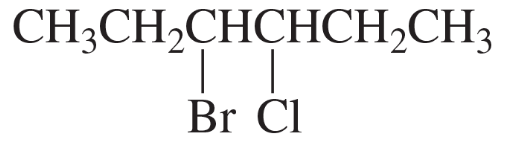
 Verified step by step guidance
 2:09
2:09