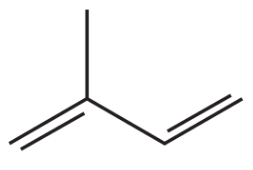
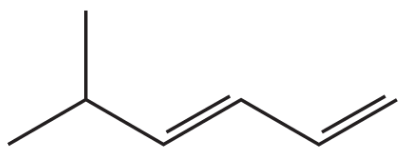
What alkyl halide reacts with lithium divinylcuprate [(CH2=CH)2CuLi] for the synthesis of each of the following compounds? c. d.
Verified step by step guidance
1
Step 1: Analyze the target compounds (c and d) provided in the image. Compound c is a linear alkene with two vinyl groups added to a straight-chain alkyl group. Compound d is a branched alkene with two vinyl groups added to a branched alkyl group.
Step 2: Understand the role of lithium divinylcuprate (3(CH2=CH)2CuLi4). This reagent is used for conjugate addition of vinyl groups to alkyl halides. The reaction involves the replacement of a halide group with vinyl groups.
Step 3: For compound c, identify the alkyl halide precursor. The target structure suggests that the starting alkyl halide should be a straight-chain alkyl halide with a halogen atom (e.g., bromine or iodine) at the position where the vinyl groups are added.
Step 4: For compound d, identify the alkyl halide precursor. The target structure suggests that the starting alkyl halide should be a branched alkyl halide with a halogen atom at the position where the vinyl groups are added.
Step 5: Write the general reaction mechanism. The lithium divinylcuprate reagent reacts with the alkyl halide via nucleophilic substitution, replacing the halogen atom with two vinyl groups. Ensure the correct stereochemistry and connectivity in the final product.
Verified video answer for a similar problem:
This video solution was recommended by our tutors as helpful for the problem above
Video duration:
1m
Play a video:
0 Comments
Key Concepts
Here are the essential concepts you must grasp in order to answer the question correctly.
Alkyl Halides
Alkyl halides are organic compounds containing a carbon atom bonded to a halogen atom (F, Cl, Br, I). They are important in organic synthesis due to their reactivity, particularly in nucleophilic substitution and elimination reactions. Understanding the structure and reactivity of alkyl halides is crucial for predicting the products of reactions involving these compounds.
Lithium divinylcuprate (Li2CuC4H4) is a reagent used in organic synthesis, particularly for the conjugate addition to α,β-unsaturated carbonyl compounds. It acts as a nucleophile, allowing for the formation of new carbon-carbon bonds. Recognizing how this reagent interacts with alkyl halides is essential for determining the appropriate starting materials for synthesizing target compounds.
Nucleophilic substitution reactions involve the replacement of a leaving group (such as a halide) by a nucleophile. These reactions can follow either an SN1 or SN2 mechanism, depending on the structure of the alkyl halide and the conditions of the reaction. Understanding these mechanisms is vital for predicting the outcome of reactions involving alkyl halides and reagents like lithium divinylcuprate.