Acetylacetone (pentane-2,4-dione) reacts with sodium hydroxide to give water and the sodium salt of a carbanion. Write a complete structural formula for the carbanion, and use resonance forms to show the stabilization of the carbanion.
Verified step by step guidance
1
Identify the acidic hydrogen in acetylacetone. The hydrogen atom on the carbon between the two carbonyl groups (CH2) is acidic due to the electron-withdrawing effect of the carbonyl groups.
When acetylacetone reacts with sodium hydroxide, the hydroxide ion (OH-) abstracts the acidic hydrogen, forming water and leaving behind a carbanion at the central carbon.
Draw the carbanion structure: The central carbon now has a negative charge, represented as CH2^- between the two carbonyl groups.
Illustrate resonance stabilization: The negative charge on the carbanion can be delocalized to the oxygen atoms of the carbonyl groups. Draw resonance structures showing the negative charge moving to each oxygen atom, forming enolate ions.
Explain the resonance: The resonance forms show that the negative charge is shared between the central carbon and the oxygen atoms, which stabilizes the carbanion through resonance delocalization.
Verified video answer for a similar problem:
This video solution was recommended by our tutors as helpful for the problem above
Video duration:
4m
Play a video:
0 Comments
Key Concepts
Here are the essential concepts you must grasp in order to answer the question correctly.
Carbanions
Carbanions are negatively charged species that contain a carbon atom with three bonds and a lone pair of electrons. They are typically formed when a carbon atom gains an electron, resulting in a formal negative charge. Carbanions are important intermediates in organic reactions, often acting as nucleophiles due to their high electron density.
Side-Chain Reactions of Substituted Pyridines Concept 1
Resonance Stabilization
Resonance stabilization occurs when a molecule can be represented by two or more valid Lewis structures, known as resonance forms. These forms contribute to the overall stability of the molecule, as the actual structure is a hybrid of these forms. In the case of carbanions, resonance can delocalize the negative charge over multiple atoms, reducing the energy and increasing stability.
Acetylacetone (pentane-2,4-dione) is a β-diketone that can easily form enolates in the presence of a base like sodium hydroxide. The deprotonation of one of the acidic hydrogen atoms adjacent to the carbonyl groups leads to the formation of a carbanion. This reaction is significant in organic synthesis, as it allows for the formation of various derivatives through nucleophilic substitution.

 4:35 minutes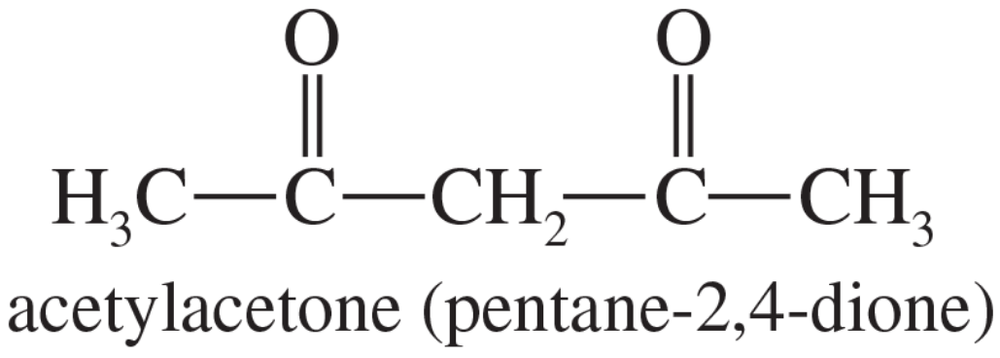
 Verified step by step guidance
 2:36
2:36