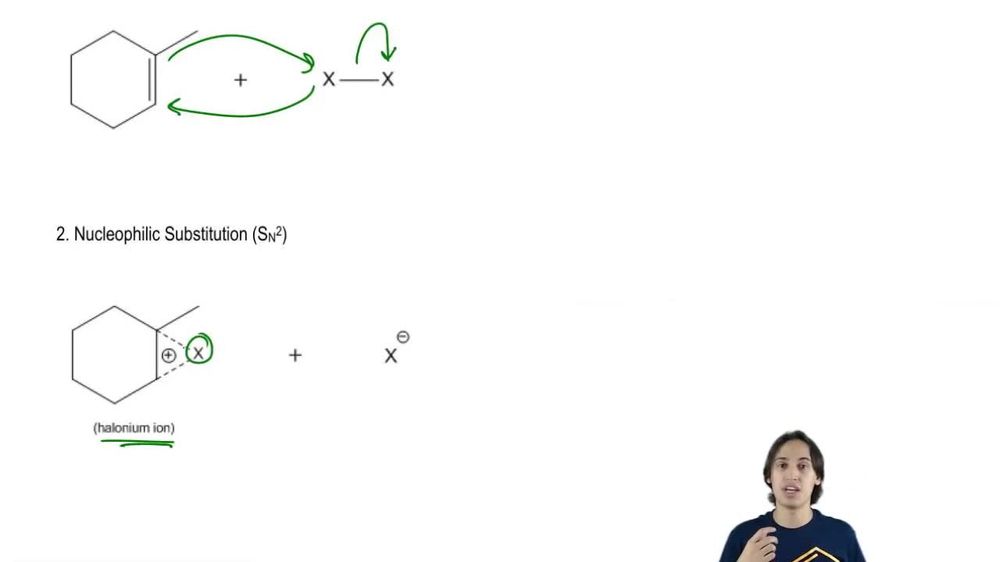
Name the following halogenated compounds according to the IUPAC rules of nomenclature. (c)
Verified step by step guidance
1
Step 1: Identify the longest continuous carbon chain in the compound. This chain will serve as the parent chain, and its name will be based on the number of carbon atoms it contains (e.g., methane, ethane, propane, etc.).
Step 2: Determine the functional groups attached to the parent chain. In this case, focus on the halogen substituents (e.g., fluorine, chlorine, bromine, iodine). Assign their positions based on the carbon atoms they are attached to, ensuring the numbering starts from the end of the chain closest to a substituent.
Step 3: Assign locants (numbers) to the substituents to indicate their positions on the parent chain. If there are multiple substituents, use the lowest possible set of numbers when numbering the chain.
Step 4: Arrange the substituents in alphabetical order when writing the name. Prefixes such as 'di-', 'tri-', etc., used for multiple identical substituents, are not considered in alphabetical ordering.
Step 5: Combine the elements of the name: start with the substituents (including their locants), followed by the name of the parent chain. Ensure the name is written as a single word with no spaces, and use hyphens to separate numbers from words.
Verified video answer for a similar problem:
This video solution was recommended by our tutors as helpful for the problem above
Video duration:
4m
Play a video:
0 Comments
Key Concepts
Here are the essential concepts you must grasp in order to answer the question correctly.
IUPAC Nomenclature
The International Union of Pure and Applied Chemistry (IUPAC) nomenclature provides a systematic method for naming chemical compounds. It involves identifying the longest carbon chain, determining the functional groups, and assigning locants to indicate the position of substituents. Understanding these rules is essential for accurately naming organic compounds, including halogenated ones.
Halogenated compounds are organic molecules that contain one or more halogen atoms (fluorine, chlorine, bromine, or iodine) as substituents. The presence of halogens can significantly influence the chemical properties and reactivity of the compound. Recognizing the type and position of halogens is crucial for proper nomenclature according to IUPAC rules.
In IUPAC nomenclature, the position of substituents, including halogens, is indicated by numbers assigned to the carbon atoms in the main chain. The numbering starts from the end of the chain closest to the first substituent. Correctly identifying and numbering these positions is vital for providing an unambiguous name for the compound.

 4:54 minutes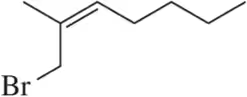
 Verified step by step guidance
 03:43
03:43