Explain why the C-3 OH group of vitamin C is more acidic than the C-2 OH group.
Verified step by step guidance
1
Identify the structure of vitamin C (ascorbic acid) from the image. It contains a six-membered ring with hydroxyl groups at positions C-2, C-3, and C-5, along with a lactone group at C-1 and a double bond between C-2 and C-3.
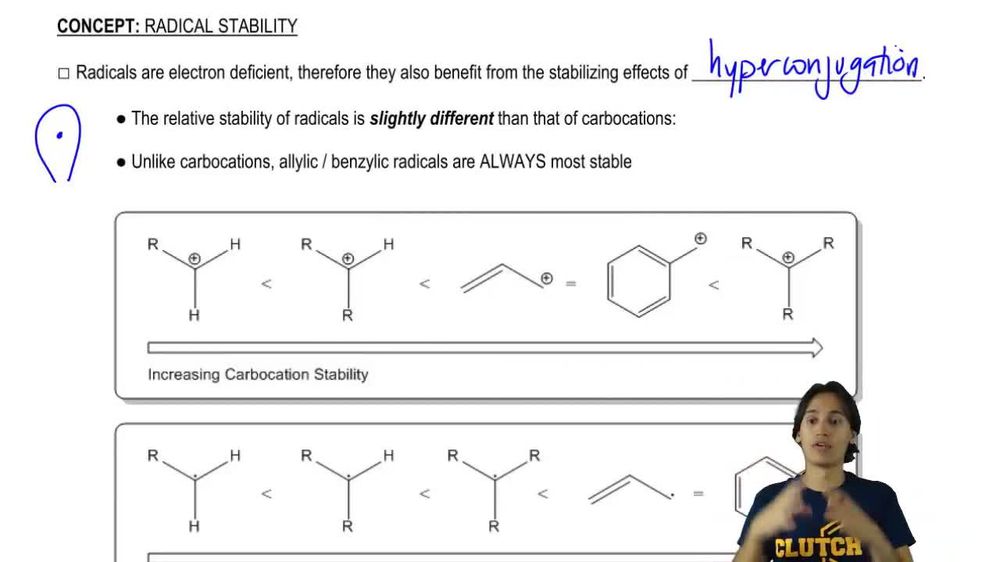
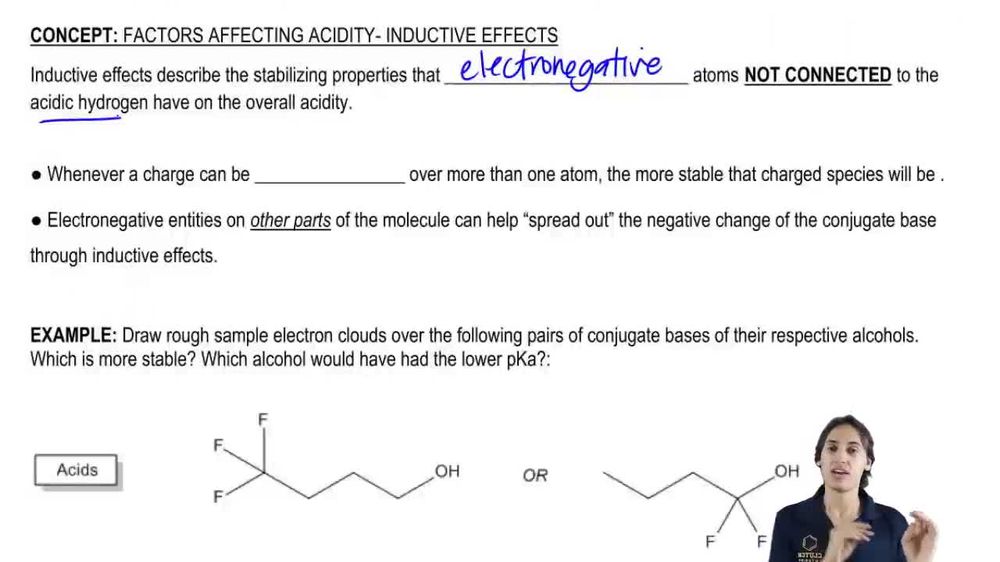
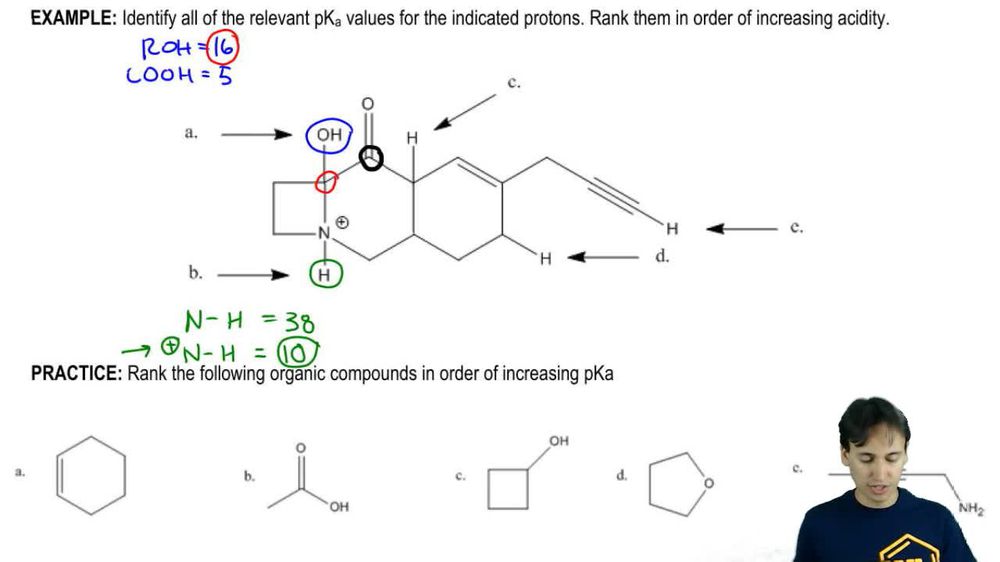
Understand the concept of acidity in organic molecules. Acidity is influenced by the ability of the molecule to stabilize the negative charge on the conjugate base after deprotonation. This stabilization can occur through resonance, inductive effects, or hydrogen bonding.
Analyze the C-3 OH group. When the proton is removed from the C-3 OH group, the resulting conjugate base can delocalize the negative charge through resonance with the adjacent double bond between C-2 and C-3. This resonance stabilization makes the C-3 OH group more acidic.
Compare the C-2 OH group. When the proton is removed from the C-2 OH group, the resulting conjugate base does not benefit from resonance stabilization because the negative charge cannot delocalize effectively into the ring system. This makes the C-2 OH group less acidic.
Conclude that the C-3 OH group is more acidic than the C-2 OH group due to the resonance stabilization of its conjugate base, which is not available for the C-2 OH group.
Verified video answer for a similar problem:
This video solution was recommended by our tutors as helpful for the problem above
Video duration:
4m
Play a video:
0 Comments
Key Concepts
Here are the essential concepts you must grasp in order to answer the question correctly.
Acidity and pKa
Acidity in organic chemistry refers to the tendency of a compound to donate a proton (H+). The strength of an acid is often measured by its pKa value; lower pKa values indicate stronger acids. In the context of vitamin C, the C-3 OH group is more acidic than the C-2 OH group, which can be attributed to the stability of the resulting conjugate base after deprotonation.
Resonance stabilization occurs when a molecule can be represented by multiple valid Lewis structures, allowing for the delocalization of electrons. In vitamin C, the conjugate base formed from the C-3 OH group can be stabilized by resonance with the adjacent carbonyl group, making it more favorable for the C-3 OH group to lose a proton compared to the C-2 OH group, which lacks similar stabilization.
The inductive effect refers to the electron-withdrawing or electron-donating effects of substituents on a molecule, influencing acidity. In vitamin C, the presence of electronegative atoms or groups near the C-3 OH group can enhance its acidity by stabilizing the negative charge on the conjugate base through inductive withdrawal of electron density, further contributing to the greater acidity of the C-3 OH group compared to the C-2 OH group.