Intro to Organic Chemistry quiz #8 Flashcards

Intro to Organic Chemistry quiz #8
Control buttons has been changed to "navigation" mode.
1/10
  • How is organic chemistry currently defined?
    Organic chemistry is currently defined as the study of molecules that contain both carbon and hydrogen, typically created and used by biological systems.
  • Which general chemistry concepts are most relevant to organic chemistry?
    Periodic trends are among the few general chemistry concepts that carry over to organic chemistry. Most other general chemistry topics are not heavily emphasized in organic chemistry.
  • Why is organic chemistry considered the chemistry of life?
    Organic chemistry studies molecules created and used by biological systems. These molecules are fundamental to the processes that sustain life on Earth.
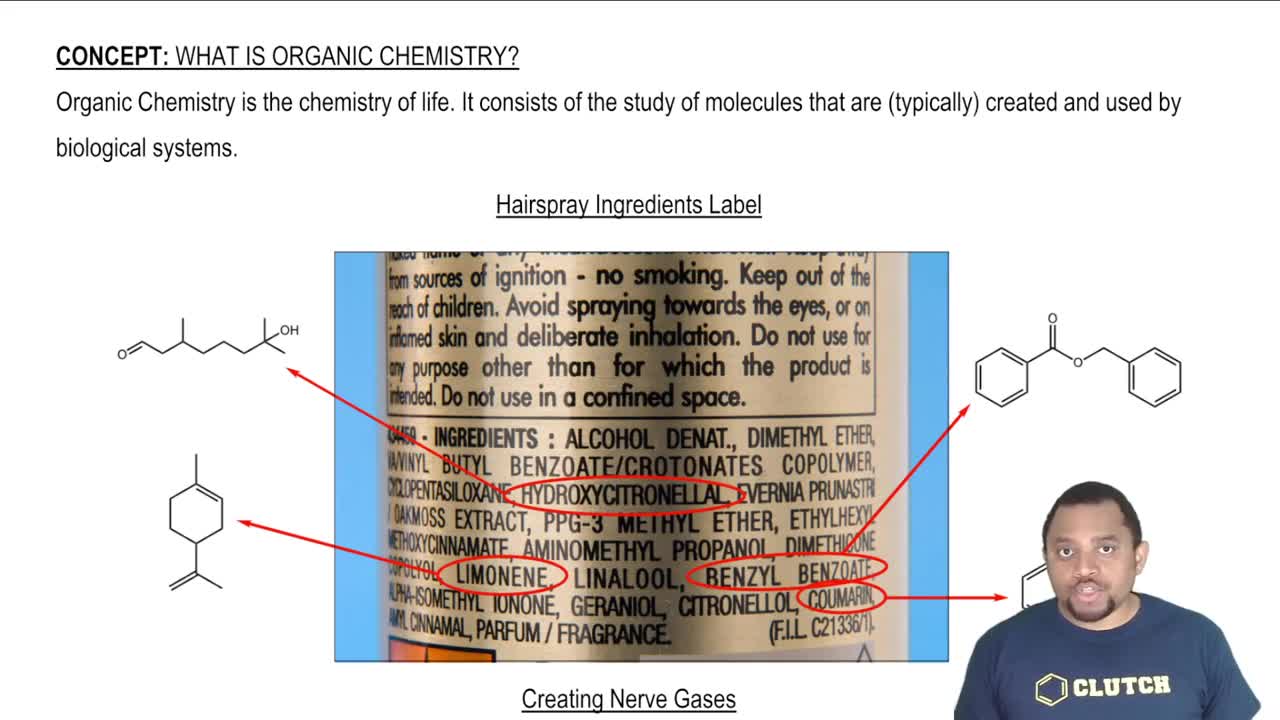
  • How does organic chemistry relate to everyday products like hairspray?
    Organic chemistry is involved in the ingredients found in everyday products such as hairspray. Many of these ingredients are organic molecules that you will learn to recognize and interpret.
  • What is an example of a destructive application of organic chemistry?
    The creation of nerve gases is a destructive application of organic chemistry. These gases involve organic molecules interacting with biological systems.
  • What is biochemistry in relation to organic chemistry?
    Biochemistry is an offshoot of organic chemistry that focuses on how organic molecules interact within biological systems. It builds upon the concepts learned in organic chemistry.
  • How has the definition of an organic molecule changed over time?
    The definition of an organic molecule has varied depending on the era and textbook. Today, consensus generally defines organic molecules as those containing both carbon and hydrogen.
  • What element is central to the chemistry of life on Earth?
    Carbon is the central element in the chemistry of life on Earth. Most biological molecules are built around carbon atoms.
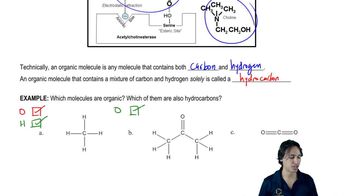
  • What is a hydrocarbon in the context of organic chemistry?
    A hydrocarbon is an organic molecule that contains only carbon and hydrogen atoms. It does not include any other elements.
  • Why might definitions of organic molecules differ in some textbooks?
    Definitions of organic molecules can differ due to historical changes and varying scientific perspectives. However, most sources now agree that organic molecules contain both carbon and hydrogen.