How can you determine whether a compound is capable of having diastereomers based on the number of chiral centers it contains?
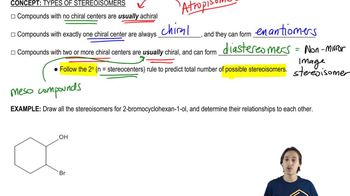
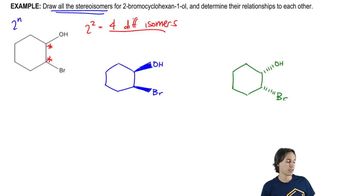
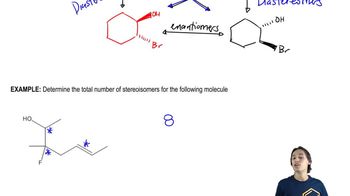
A compound can have diastereomers if it contains two or more chiral centers. Diastereomers are stereoisomers that are not mirror images of each other. Compounds with no chiral centers generally cannot have diastereomers (except for rare atropisomers), and compounds with exactly one chiral center can only have enantiomers, not diastereomers. Therefore, only compounds with two or more chiral centers (excluding meso compounds, which are achiral due to internal symmetry) can have diastereomers.
 Back
Back

 00:49
00:49