Pearson+ LogoPearson+ Logo

Body's Defense System definitions Flashcards

Back
Body's Defense System definitions
Control buttons has been changed to "navigation" mode.
1/17
  • Skin

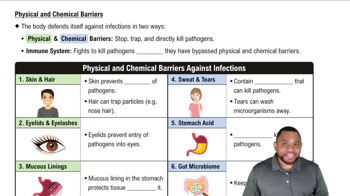
    Acts as a physical shield, preventing harmful microorganisms from entering the body and causing infection.
  • Hair

    Traps particles and pathogens, especially in areas like the nose, reducing their entry into the body.
  • Mucus Lining

    Protects underlying tissues and traps pathogens, aiding in their removal from the body.
  • Sweat

    Contains chemicals that can kill pathogens on the skin, contributing to the body's chemical defense.
  • Tears

    Wash away microorganisms from the eyes and contain substances that destroy pathogens.
  • Stomach Acid

    Highly acidic environment that degrades and destroys many types of ingested pathogens.
  • Gut Microbiome

    Community of beneficial bacteria in the digestive tract that competes with and suppresses harmful invaders.
  • Immune System

    Complex network of cells and processes that activates to eliminate pathogens that bypass initial barriers.
  • Innate Immunity

    Nonspecific, immediate defense present from birth, using cells to catch and destroy invaders.
  • Adaptive Immunity

    Specialized defense that evolves over time, targeting specific pathogens and creating long-term protection.
  • Neutrophil

    Type of white blood cell that rapidly responds to infections by engulfing and destroying pathogens.
  • Macrophage

    Large phagocytic cell that engulfs pathogens and dead cells, playing a key role in innate defense.
  • Natural Killer Cell

    Immune cell that identifies and destroys infected or abnormal cells without prior exposure.
  • Lymphocyte

    White blood cell involved in adaptive immunity, including B and T cells that target specific invaders.
  • Antibody

    Y-shaped protein produced by certain immune cells that binds to antigens, neutralizing or marking them for destruction.
  • Antigen

    Molecule on cell surfaces recognized by the immune system as foreign, triggering a targeted response.
  • Memory Cell

    Long-lived immune cell that retains information about past invaders, enabling faster future responses.