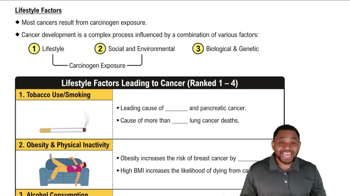
What is the leading cause of lung and pancreatic cancer?
Tobacco use and smoking are the leading causes of lung and pancreatic cancer.
How much does obesity increase the risk of breast cancer?
Obesity increases the risk of breast cancer by about two to four times.
What percentage of lung cancer deaths is caused by smoking?
Smoking causes more than 80% of lung cancer deaths.
Which dietary compound found in starchy foods cooked at high temperatures is considered a probable human carcinogen?
Acrylamide is the compound found in such foods and is considered a probable human carcinogen.
What types of meats are associated with increased risk of esophageal and stomach cancers?
Meats cured in salt, smoked, or containing nitrates are associated with increased risk of these cancers.
What does the World Health Organization say about safe levels of alcohol consumption regarding cancer risk?
The WHO states that no level of alcohol consumption is safe in terms of cancer risk.
Which cancers are notably associated with alcohol consumption?
Alcohol consumption is notably associated with increased risk of breast and colon cancers.
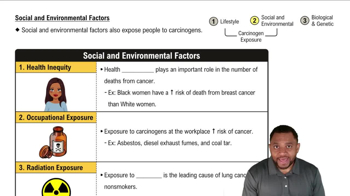
How does health inequity influence cancer risk?
Health inequity can lead to higher cancer death rates in certain populations, such as black women having a higher risk of death from breast cancer than white women.
Name three occupational carcinogens that increase cancer risk.
Asbestos, diesel exhaust fumes, and coal tar are occupational carcinogens that increase cancer risk.
What is the leading cause of lung cancer in nonsmokers?
Exposure to radon is the leading cause of lung cancer in nonsmokers.
What environmental factor is responsible for most skin cancers?
Most skin cancers are caused by exposure to UV radiation from the sun.
How can the environment where you live or work affect your cancer risk?
Living or working in environments with more carcinogen exposure, such as polluted cities or workplaces with hazardous substances, increases cancer risk.
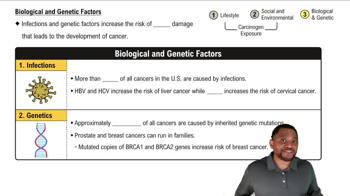
What percentage of cancers in the US are caused by infections?
More than 10% of all cancers in the US are caused by infections.
Which infections increase the risk of liver cancer?
HBV (Hepatitis B Virus) and HCV (Hepatitis C Virus) increase the risk of liver cancer.
Which infection is linked to an increased risk of cervical cancer?
HPV (Human Papillomavirus) infection is linked to an increased risk of cervical cancer.
What percentage of cancers are caused by inherited genetic mutations?
Approximately 5% to 10% of all cancers are caused by inherited genetic mutations.
Which genes, when mutated, increase the risk of breast cancer?
Mutated copies of the BRCA1 and BRCA2 genes increase the risk of breast cancer.
How can individuals determine if they have a genetic predisposition to breast cancer?
Individuals can take genetic tests to identify if they possess mutated BRCA1 or BRCA2 genes.
Why does a high BMI increase the likelihood of dying from cancer?
A high BMI is associated with hormonal changes in adipose tissue, which can promote cancer development and increase mortality.
Why is understanding cancer risk factors important?
Understanding cancer risk factors is crucial for prevention, early detection, and improving life expectancy and health outcomes.
 Back
Back



 3:30
3:30