Pearson+ LogoPearson+ Logo

Communication quiz #1 Flashcards

Back
Communication quiz #1
Control buttons has been changed to "navigation" mode.
1/10
  • What is the primary role of communication in enhancing personal health and relationships?

    The primary role of communication in enhancing personal health and relationships is to foster mutual understanding, emotional intelligence, and strong interpersonal connections through self-disclosure, active listening and feedback, and effective use of nonverbal cues. These components help individuals share personal experiences, interpret messages accurately, and convey emotions, ultimately leading to healthier and more fulfilling relationships.
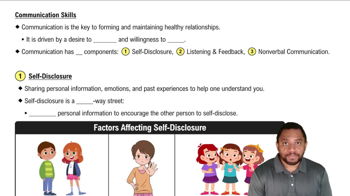
  • What are two potential negative consequences of self-disclosure in relationships?

    Fear of rejection and previous violations of confidentiality are two negative consequences. These can make individuals hesitant to share personal information in future relationships.
  • How does self-disclosure function as a 'two-way street' in communication?

    When one person shares personal information, it encourages the other person to reciprocate. This mutual exchange helps build trust and understanding.
  • What is the main difference between active and passive listening?

    Active listening involves fully engaging with the speaker and providing thoughtful feedback. Passive listening means hearing the speaker without truly paying attention or responding meaningfully.
  • What is selective listening and how can it affect communication?

    Selective listening is focusing only on parts of a message that support one's existing beliefs. This can lead to misunderstandings and incomplete communication.
  • List two strategies to improve your listening skills during a conversation.

    You can avoid distractions and ask for clarification if something is unclear. Being present in the moment and not interrupting also help improve listening.
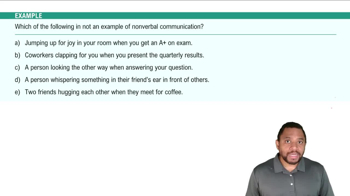
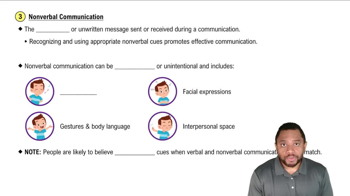
  • What are some examples of nonverbal communication mentioned in the video?

    Examples include tone of voice, facial expressions, gestures, body language, and interpersonal space. These cues can convey emotions and intentions without words.
  • Why is it important for verbal and nonverbal communication to match?

    When verbal and nonverbal messages do not align, it can cause confusion and mistrust. People are more likely to believe nonverbal cues if there is a mismatch.
  • How can interpersonal space serve as a form of nonverbal communication during conflict?

    Withdrawing or increasing distance can signal a need to be left alone without saying anything. This nonverbal cue communicates emotional boundaries to others.
  • What role does feedback play in the communication process?

    Feedback is the response given by the receiver to indicate the message was received. It helps ensure that communication is effective and understood.