Control buttons has been changed to "navigation" mode.
1/10
Terms in this set (10)
During prolonged exercise, when is it important to provide carbohydrates continuously?
Carbohydrates should be provided continuously during prolonged or intense exercise to maintain energy levels, as they are the body's primary source of energy and help replenish glycogen stores in muscles and the liver.
What is the primary storage form of glucose in the human body?
Glycogen is the primary storage form of glucose, found mainly in the liver and muscle tissue. It consists of many glucose molecules strung together.
How do simple and complex carbohydrates differ in their molecular structure?
Simple carbohydrates are made of one or two sugar molecules, while complex carbohydrates consist of long chains of glucose molecules, often with branching. This structural difference affects how quickly they are digested and absorbed.
What are the two main types of fiber found in complex carbohydrates, and how do they function in the body?
The two main types are water-soluble fiber, which is digestible by gut bacteria, and insoluble fiber, which helps move food through the digestive tract. Both types contribute to digestive health and satiety.
Why is it important to consume more complex carbohydrates than simple carbohydrates in a healthy diet?
Complex carbohydrates provide more fiber and nutrients, leading to sustained energy and better regulation of eating habits. Simple carbohydrates, often found in sugary foods, can cause rapid spikes in blood sugar.
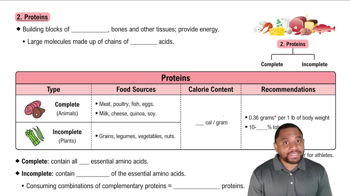
What distinguishes complete proteins from incomplete proteins?
Complete proteins contain all nine essential amino acids required by the body, while incomplete proteins lack one or more of these amino acids. Animal products are typically complete, while most plant sources are incomplete.
How can individuals who do not eat animal products obtain all essential amino acids?
They can combine different plant-based protein sources, known as complementary proteins, to ensure they receive all essential amino acids. Examples include pairing grains with legumes.
What is the main health risk associated with consuming too much saturated fat?
Excessive intake of saturated fat is linked to a higher risk of heart disease and stroke. Therefore, it is recommended to keep saturated fat intake below 10% of total daily calories.
How are monounsaturated and polyunsaturated fats different in terms of their chemical structure and food sources?
Monounsaturated fats have two hydrogens missing and are found in foods like avocados and nut oils, while polyunsaturated fats have four or more hydrogens missing and are found in fish and certain plant oils. Their physical state at room temperature also differs.
What is hyponatremia and how can it result from excessive water intake?
Hyponatremia is a condition where sodium levels in the body become dangerously low due to excessive water consumption. This imbalance can disrupt bodily functions and potentially affect the heart.