Pearson+ LogoPearson+ Logo

Mastering Your Health Behaviors quiz #1 Flashcards

Back
Mastering Your Health Behaviors quiz #1
Control buttons has been changed to "navigation" mode.
1/10
  • What is health promotion and how does it relate to mastering health behaviors?

    Health promotion involves empowering individuals to improve their well-being by adopting positive health behaviors. It includes recognizing the process of change, developing self-efficacy and an internal locus of control, setting realistic SMART goals, and using strategies like positive self-talk and journaling to sustain healthy habits and reduce risks associated with chronic diseases.
  • Which activities are considered creative thinking exercises when working to master health behaviors?

    Creative thinking exercises for mastering health behaviors include visualization (envisioning yourself achieving your goals), journaling (recording progress and identifying triggers), and brainstorming solutions to barriers. These activities help generate new ideas, reinforce motivation, and support sustainable behavior change.
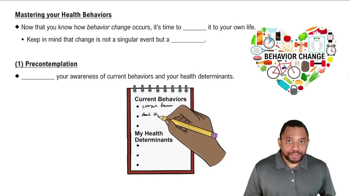
  • What is the significance of distinguishing between modifiable and non-modifiable health determinants during the precontemplation stage?

    Distinguishing between modifiable and non-modifiable health determinants helps individuals focus on changes they can control. This awareness guides effective goal setting and behavior change strategies.
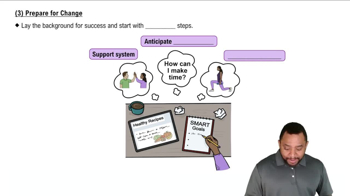
  • How does cultivating a community of like-minded people support the preparation stage of behavior change?

    A supportive community provides encouragement and accountability, making it easier to maintain motivation. It also helps individuals overcome barriers and sustain progress toward their goals.
  • Why is visualization considered an important strategy in preparing for health behavior change?

    Visualization helps individuals mentally rehearse their desired actions and outcomes. This technique increases motivation and confidence in achieving health goals.
  • What role does positive reinforcement play in the action stage of mastering health behaviors?

    Positive reinforcement rewards healthy choices, making them more likely to be repeated. It helps sustain motivation and progress toward long-term goals.
  • How can identifying triggers help prevent relapses in health behavior change?

    Recognizing triggers allows individuals to anticipate and manage situations that may lead to unhealthy behaviors. This proactive approach reduces the likelihood of falling back into old habits.
  • Why is it important for SMART goals to be both attainable and realistic?

    Attainable and realistic goals ensure that objectives are within an individual's capabilities and circumstances. This increases the likelihood of success and prevents discouragement from setting unachievable targets.
  • What is the purpose of setting a clear deadline when creating a SMART goal?

    A clear deadline provides a specific time frame for achieving the goal, which helps maintain focus and urgency. It prevents goals from becoming indefinite and unstructured.
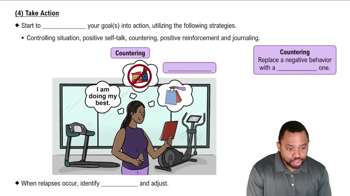
  • How does countering negative impulses contribute to successful health behavior change?

    Countering involves replacing unhealthy urges with positive actions or rewards. This strategy helps individuals resist temptations and stay committed to their health goals.