Skip to main content
Personal Health
My Course
Learn
Exam Prep
AI Tutor
Study Guides
Flashcards
Try the app
My Course
Learn
Exam Prep
AI Tutor
Study Guides
Flashcards
Try the app
Back
Nutritional Guidelines definitions
You can tap to flip the card.
Dietary Guidelines for Americans
You can tap to flip the card.
👆
Dietary Guidelines for Americans
Federal recommendations updated every five years, guiding healthy eating and physical activity for all life stages.
Track progress
Control buttons has been changed to "navigation" mode.
1/15
Related flashcards
Related practice
Recommended videos
Nutritional Guidelines quiz
Nutritional Guidelines
20 Terms
Nutritional Guidelines
Ch.5 Nutrition Basics
4 problems
Topic
Nicole
Planning a Healthy Diet
Ch.5 Nutrition Basics
5 problems
Topic
Nicole
Ch.5 Nutrition Basics - Part 1 of 2
4 topics
8 problems
Chapter
Nicole
Ch.5 Nutrition Basics - Part 2 of 2
3 topics
8 problems
Chapter
Nicole
Guided course
1:55
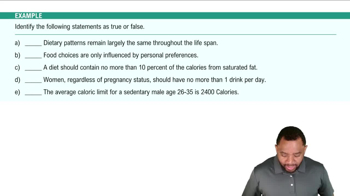
Dietary Guidelines for Americans Example 1
53
views
Guided course
1:33
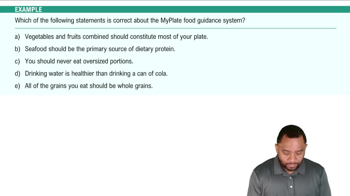
MyPlate Food Guidance System Example 2
59
views
Guided course
1:39
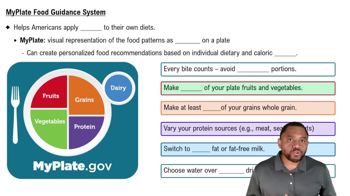
MyPlate Food Guidance System Concept 2
56
views
Terms in this set (15)
Hide definitions
Dietary Guidelines for Americans
Federal recommendations updated every five years, guiding healthy eating and physical activity for all life stages.
Nutrient-rich Foods
Items providing high levels of vitamins, minerals, and other beneficial substances with relatively few calories.
Portion Sizes
Suggested amounts of food to consume at each meal, tailored to age, activity level, and individual needs.
MyPlate Food Guidance System
Government tool visually dividing a plate into food groups to help design balanced, personalized meals.
Whole Grains
Grain products containing all essential parts of the grain kernel, offering more fiber and nutrients than refined grains.
Protein Sources
Variety of foods such as meats, seafood, legumes, nuts, and beans that supply essential amino acids.
Added Sugars
Sweeteners incorporated during processing or preparation, recommended to be less than 10% of daily calories.
Saturated Fats
Fats mainly found in animal products and some oils, advised to be limited to less than 10% of daily calories.
Sodium
Mineral commonly found in salt, with intake ideally kept below 2,300 milligrams per day to support heart health.
Hydration
Maintaining adequate fluid intake, preferably through water, to support bodily functions and overall health.
Caloric Limits
Recommended daily energy intake based on age, sex, activity level, and individual characteristics.
Physical Activity
Regular movement essential for health, included in dietary guidelines to complement nutrition for well-being.
Personal Preferences
Individual tastes and choices considered when customizing dietary patterns for sustainability and enjoyment.
Cultural Traditions
Food practices and customs from diverse backgrounds, integrated into dietary planning for inclusivity.
Budget Considerations
Financial factors influencing food choices, ensuring healthy eating is accessible and affordable.
 BackBack
 1:55
1:55