What is the term for a specialist who studies outbreaks of disease in populations?
An epidemiologist is a specialist who studies outbreaks of disease in populations.
What is the study of disease in human populations called?
The study of disease in human populations is called epidemiology.
What is the difference between primary and secondary prevention of disease?
Primary prevention aims to prevent disease before it occurs by promoting healthy behaviors, while secondary prevention focuses on early detection and intervention to halt or slow the progression of disease.
What is a main goal of school health nursing programs?
A main goal of school health nursing programs is to promote the health and wellness of students, supporting healthy behaviors and preventing disease within the school community.
Who is a specialist in the study of disease outbreaks within populations?
An epidemiologist is a specialist in the study of disease outbreaks within populations.
Why are health screenings considered important measures in population health?
Health screenings are important because they help with early detection of diseases, allowing for timely intervention and prevention of further health complications.
What does health disparities research focus on?
Health disparities research focuses on understanding and addressing differences in health outcomes among various population groups, often due to social, economic, or environmental factors.
How is a health disparity described in population health?
A health disparity is a difference in health outcomes between groups that is often linked to social, economic, or environmental disadvantages.
What is a community health center?
A community health center is a healthcare facility that provides primary care and preventive services to local populations, often focusing on underserved communities.
Who are considered the fathers of public health?
The fathers of public health are individuals who made significant contributions to the development of public health practices, such as John Snow and Edwin Chadwick.
How can the Clean Water Act best promote health in a population?
The Clean Water Act promotes health by ensuring access to clean and safe water, reducing the risk of waterborne diseases and supporting overall public health.
Is it true that health disparities are similarities in health outcomes between groups?
No, health disparities refer to differences, not similarities, in health outcomes between groups.
What function of public health is performed using epidemiology?
Epidemiology is used to monitor, investigate, and control disease outbreaks, helping to protect and improve population health.
What is a key responsibility of public health?
A key responsibility of public health is to prevent disease, promote health, and protect populations through organized efforts and informed policies.
What is true about clients with low health literacy?
Clients with low health literacy may have difficulty understanding health information, which can affect their ability to make informed health decisions and follow medical advice.
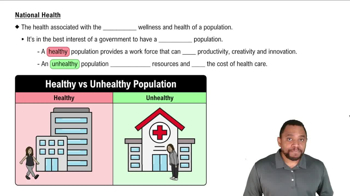
How do lifestyle choices impact population health outcomes?
Lifestyle choices such as tobacco use, poor diet, and excessive alcohol consumption increase risk factors for chronic diseases and negatively impact population health outcomes.
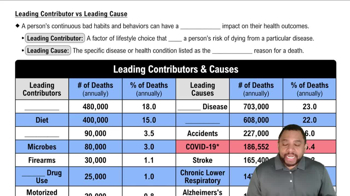
What is the difference between a leading contributor and a leading cause of death?
A leading contributor is a lifestyle or behavioral factor that increases the risk of dying from a disease, while a leading cause is the specific disease or condition listed as the primary reason for death.