What screening methods are commonly used to test for cardiovascular disease?
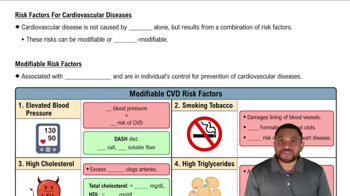
Screening for cardiovascular disease commonly includes measuring blood pressure, cholesterol levels (total, LDL, HDL), triglyceride levels, and fasting glucose. These tests help identify modifiable risk factors such as hypertension, high cholesterol, high triglycerides, and diabetes.
What lifestyle changes can help prevent hypertension and reduce the risk of cardiovascular disease?
Hypertension can be prevented by adopting lifestyle changes such as following a diet low in salt and high in soluble fiber (like the DASH diet), engaging in regular physical activity, maintaining a healthy weight, avoiding smoking, and managing cholesterol and blood sugar levels.
How does smoking contribute to the development of cardiovascular disease?
Smoking damages the lining of blood vessels and increases the formation of blood clots. It also raises the risk of coronary heart disease.
What cholesterol levels are considered healthy for total cholesterol, HDL, and LDL?
Healthy levels are total cholesterol less than 200 mg/dL, HDL equal to or greater than 60 mg/dL, and LDL less than 100 mg/dL. These values help reduce cardiovascular disease risk.
How does diabetes affect the risk of cardiovascular disease in men and women?
Diabetes increases the risk of cardiovascular disease twofold in men and threefold in women. This makes diabetes a significant modifiable risk factor.
What is metabolic syndrome and how is it related to cardiovascular disease risk?
Metabolic syndrome is diagnosed when three or more out of five specific risk factors are present, such as abdominal obesity, low HDL, high triglycerides, high blood pressure, and high fasting glucose. It significantly increases the risk of developing cardiovascular diseases.
Which non-modifiable risk factor is associated with higher rates of cardiovascular disease in Native Americans compared to Asians?
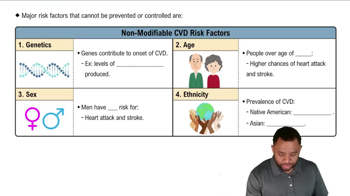
Ethnicity is the non-modifiable risk factor, with Native Americans having the highest rates and Asians the lowest rates of major cardiovascular diseases. This difference is due to genetic and population-level factors.
Why is physical inactivity considered a modifiable risk factor for cardiovascular disease?
Physical inactivity is linked to high blood pressure, lower healthy cholesterol (HDL), and increased risk of overweight and obesity. Regular exercise can help mitigate these risks.
How does age influence the likelihood of developing cardiovascular diseases?
People over the age of 55 have a higher chance of heart disease, heart attacks, and strokes. Age is a non-modifiable risk factor that increases risk as people get older.
What role do genetics play in cardiovascular disease risk?
Certain genes can affect cholesterol production and other factors, increasing the likelihood of developing cardiovascular diseases. Genetics is a non-modifiable risk factor that individuals cannot control.