Sleep debt is the result of consistently getting less sleep than the body needs, leading to a cumulative deficiency in rest.
Is sleep considered a kind of temporary coma? Explain.
No, sleep is not a kind of temporary coma. Sleep is a natural, reversible state of rest essential for health, while a coma is a prolonged state of unconsciousness due to injury or illness.
What is a social benefit of getting healthy sleep?
A social benefit of healthy sleep is improved cognitive function, which enhances memory, learning, and problem-solving skills, supporting better social interactions and relationships.
What is a long-term effect of chronic sleep deprivation?
A long-term effect of chronic sleep deprivation is an increased risk of developing chronic diseases such as obesity, diabetes, and cardiovascular disease.
How does lack of sleep affect the risk of injury?
Lack of sleep impairs cognitive function, memory, and problem-solving abilities, which increases the risk of accidents and injuries.
How many hours of sleep are recommended for most adults each night?
Most adults are recommended to get 7 to 9 hours of sleep each night.
Why is getting adequate sleep an important part of physical health?
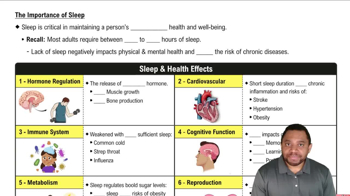
Getting adequate sleep is important for physical health because it supports hormone regulation, cardiovascular health, immune function, metabolism, and reproductive health.
What is a likely consequence of chronic sleep debt?
Chronic sleep debt is most likely to promote increased risk of chronic diseases, impaired cognitive function, and weakened immune system.
How does insufficient sleep affect the release of growth hormone and muscle growth?
Insufficient sleep reduces the release of growth hormone, which can lead to decreased muscle growth and improper bone production. This highlights the regenerative role of sleep in physical development.
What are some reproductive health consequences of chronic sleep deprivation for men and women?
Chronic sleep deprivation can decrease semen concentration, sperm mobility, and testicle size in men, while reducing fertility rates in women. These effects demonstrate sleep's importance for reproductive health.
 Back
Back

 3:48
3:48