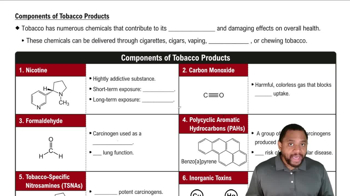
A highly addictive chemical in tobacco that alters mood by triggering dopamine release and causes both stimulant and depressant effects depending on exposure.
Carbon Monoxide
A colorless, toxic gas in tobacco smoke that blocks oxygen uptake, leading to suffocation risk and reduced oxygen delivery in the body.
Formaldehyde
A carcinogenic preservative found in tobacco, also used in corpse preservation, linked to decreased lung function and cancer risk.
Polycyclic Aromatic Hydrocarbons
A group of over 100 carcinogenic compounds produced by burning tobacco, with benzopyrene as a common example.
Tobacco-Specific Nitrosamines
Potent carcinogens formed during tobacco leaf drying, structurally related to nicotine, and strongly linked to cancer development.
Inorganic Toxins
Heavy metals such as copper, mercury, lead, and cadmium in tobacco that increase cancer risk and cause neurological damage.
Dopamine
A neurotransmitter released by nicotine, responsible for feelings of pleasure, safety, and happiness, reinforcing tobacco dependence.
Withdrawal Symptoms
Physical and psychological effects like irritability, restlessness, increased hunger, and anxiety experienced after stopping nicotine use.
Vaping
The inhalation of vaporized nicotine using e-cigarettes, delivering higher concentrations of nicotine more rapidly than traditional smoking.
Nicotine Pouches
Oral products containing nicotine without other tobacco components, placed in the mouth to release nicotine into the system.
Chewing Tobacco
A smokeless tobacco product consumed orally, delivering harmful chemicals directly into the body through the mouth.
Traditional Smoking
The use of cigarettes, cigars, or pipes to inhale tobacco smoke, associated with declining rates but significant health risks.
Carcinogen
A substance in tobacco, such as formaldehyde or PAHs, that promotes the development of cancer after prolonged exposure.
Dependence
A physical and psychological state resulting from repeated nicotine exposure, making quitting tobacco use difficult.
Education
A factor strongly correlated with lower smoking rates, as increased awareness of tobacco risks leads to healthier choices.
 Back
Back


 1:29
1:29