Skip to main content
Personal Health
My Course
Learn
Exam Prep
AI Tutor
Study Guides
Flashcards
Try the app
My Course
Learn
Exam Prep
AI Tutor
Study Guides
Flashcards
Try the app
Back
Understanding Addiction definitions
You can tap to flip the card.
Addiction
You can tap to flip the card.
👆
Addiction
A treatable disease marked by compulsive engagement with substances or behaviors despite harmful outcomes.
Track progress
Control buttons has been changed to "navigation" mode.
1/15
Related flashcards
Related practice
Recommended videos
Understanding Addiction quiz
Understanding Addiction
20 Terms
Understanding Addiction quiz #1
Understanding Addiction
10 Terms
Understanding Addiction
Ch.9 Drugs
5 problems
Topic
Ally
Drug Effects on the Body
Ch.9 Drugs
5 problems
Topic
Laura
Ch.9 Drugs
5 topics
13 problems
Chapter
Laura
Guided course
1:23
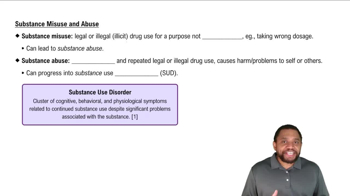
Substance Misuse and Abuse Concept 3
62
views
Guided course
1:54
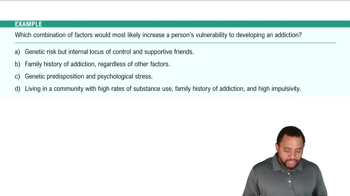
Risk Factors for Addiction Example 2
50
views
Guided course
1:23
Introduction Example 1
60
views
Terms in this set (15)
Hide definitions
Addiction
A treatable disease marked by compulsive engagement with substances or behaviors despite harmful outcomes.
Psychoactive Drugs
Substances that alter brain chemistry, affecting perception, consciousness, and mood.
Physiological Dependence
A body-based need for a substance, often resulting in tolerance and withdrawal symptoms.
Psychological Dependence
A mental or emotional reliance on substances or behaviors to cope with stress or trauma.
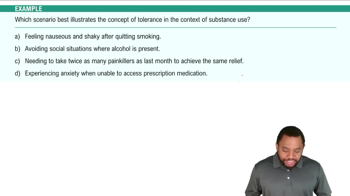
Tolerance
A state where increasing amounts of a substance are required to achieve previous effects.
Withdrawal
Unpleasant physical and psychological symptoms experienced when a substance is absent.
Genetics
Inherited biological factors that can influence susceptibility to addictive behaviors.
Mental Disorders
Psychiatric conditions that may increase vulnerability to developing addiction.
Coping Skills
Strategies or abilities used to manage stress, which can affect risk for addiction.
Locus of Control
A belief about personal influence over life events, impacting susceptibility to addiction.
Trauma
Distressing experiences that can heighten the likelihood of engaging in addictive behaviors.
Family Dynamics
Patterns of interaction within families that can shape risk for substance use and addiction.
Peer Influence
Social pressure from friends or acquaintances that can increase the chance of substance use.
Substance Misuse
Use of legal or illegal drugs for unintended purposes, such as incorrect dosages.
Substance Use Disorder
A cluster of cognitive, behavioral, and psychological symptoms linked to ongoing substance use despite problems.
 BackBack

 1:23
1:23