Does your attitude influence how regularly you exercise?
Yes, your attitude can significantly influence how regularly you exercise, as beliefs and attitudes are key factors in behavior change.
Can physical fitness attitudes change over time, or are they set during childhood?
Physical fitness attitudes can change over time; they are not fixed during childhood and can be influenced by new experiences and beliefs.
What is a common barrier to achieving good fitness according to the Health Belief Model?
A common barrier to good fitness is perceived barriers, such as time constraints, lack of motivation, or other obstacles that make it difficult to engage in healthy behaviors.
Is making it a point to work out with a friend an example of a fitness goal?
Making it a point to work out with a friend is an example of a strategy or plan to achieve a fitness goal, rather than a goal itself.
How does personality influence exercise habits?
Personality can shape exercise habits by affecting motivation, preferences, and the likelihood of adopting and maintaining healthy behaviors.
Can modifying your personal action plan impede your personal fitness goals?
Modifying your personal action plan does not necessarily impede fitness goals; adjusting your plan can help overcome barriers and support long-term success.
According to behavior change models, what are the four key beliefs that influence health behaviors?
The four key beliefs are perceived seriousness, perceived susceptibility, perceived benefits, and perceived barriers.
Does exercise qualify as a drive and need according to behavior change theories?
Exercise can be considered both a drive and a need, as it fulfills physical health requirements and can be motivated by internal or external factors.
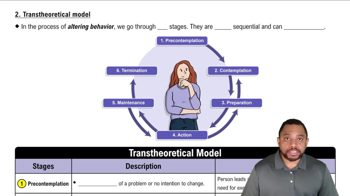
What does the precontemplation stage of the Transtheoretical Model involve?
The precontemplation stage involves being unaware of a problem or having no intention to change behavior. Individuals in this stage may not recognize the need for change, such as not seeing the importance of exercise.
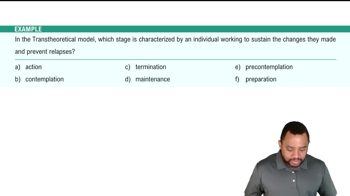
How does the maintenance stage differ from the action stage in the Transtheoretical Model?
The maintenance stage is characterized by consistently maintaining a new behavior for at least six months, even after possible relapses. In contrast, the action stage involves actively implementing the behavior change for the first time.