
Textbook Question
A dentist wants a small mirror that, when 2.00 cm from a tooth, will produce a 3.0 x upright image. What kind of mirror must be used and what must its radius of curvature be?
1849
views

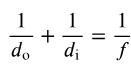
 Verified step by step guidance

 07:49
07:49
 09:03 07:49
A dentist wants a small mirror that, when 2.00 cm from a tooth, will produce a 3.0 x upright image. What kind of mirror must be used and what must its radius of curvature be?
In Example 32–4, show that if the object is moved 10.0 cm farther from the concave mirror, the object’s image size will equal the object’s actual size. Stated as a multiple of the focal length, what is the object distance for this “actual-sized image” situation?
An object 4.0 mm high is placed 18 cm from a convex mirror of radius of curvature 18 cm. Compute the image size, using Eq. 32–3.
You look at yourself in a shiny 8.4-cm-diameter Christmas tree ball. If your face is 25.0 cm away from the ball’s front surface, where is your image? Is it real or virtual? Is it upright or inverted?
(II) Show, using a ray diagram, that the lateral magnification m of a convex mirror is m = -dᵢ/dₒ , just as for a concave mirror. [Hint: Consider a ray from the top of the object that reflects at the center of the mirror.]
An object 4.0 mm high is placed 18 cm from a convex mirror of radius of curvature 18 cm. Show by ray tracing that the image is virtual, and estimate the image distance.