Geosynchronous Orbits definitions Flashcards

Geosynchronous Orbits definitions
Control buttons has been changed to "navigation" mode.
1/15
  • Synchronous Orbit
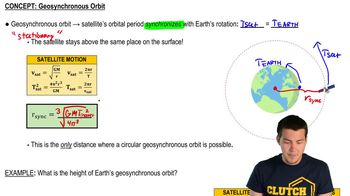
    An orbit where a satellite's period matches Earth's rotation, keeping it above the same spot.
  • Stationary Orbit
    Another term for synchronous orbit, used in telecommunications to maintain constant satellite position.
  • Orbital Period
    The time a satellite takes to complete one orbit around Earth.
  • r Synchronous
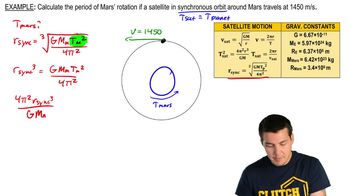
    The specific orbital distance where a satellite's period matches Earth's rotation.
  • Gravitational Constant
    A constant (G) used in calculating gravitational forces and orbital distances.
  • Mass of the Planet
    The mass (M) of a planet, crucial for determining orbital characteristics.
  • Rotation Period
    The time a planet takes to complete one full rotation on its axis.
  • Cube Root
    A mathematical operation used to solve for r synchronous in orbital calculations.
  • Earth's Radius
    The distance from Earth's center to its surface, approximately 6.37 x 10^6 meters.
  • Geosynchronous Orbit
    An orbit 35,900 km above Earth where satellites match Earth's rotation.
  • 4 Pi Squared
    A constant used in the formula to calculate synchronous orbit distance.
  • Height of Orbit
    The distance from Earth's surface to a satellite in geosynchronous orbit.
  • Telecommunications
    The field that uses stationary orbits to maintain constant satellite communication.
  • Orbital Distance
    The distance from Earth's center to a satellite in orbit.
  • Earth's Day
    The 24-hour period it takes for Earth to complete one rotation.