Skip to main content
Physics
My Course
Learn
Exam Prep
AI Tutor
Study Guides
Textbook Solutions
Flashcards
Explore
Try the app
My Course
Learn
Exam Prep
AI Tutor
Study Guides
Textbook Solutions
Flashcards
Explore
Try the app
Back
Physics Exam 1 Key Concepts
You can tap to flip the card.
What makes a hypothesis scientific?
You can tap to flip the card.
👆
What makes a hypothesis scientific?
A scientific hypothesis must be
testable
and
falsifiable
, meaning it can potentially be proven wrong.
Track progress
Control buttons has been changed to "navigation" mode.
1/34
Recommended videos
Guided course
01:55
Review of Vectors vs. Scalars
16186
views
769
rank
4
comments
Terms in this set (34)
Hide definitions
What makes a hypothesis scientific?
A scientific hypothesis must be
testable
and
falsifiable
, meaning it can potentially be proven wrong.
Difference between scalars and vectors
Scalars
have magnitude only (e.g., speed, mass).
Vectors
have magnitude and direction (e.g., force, velocity).
Which physical quantities are vectors?
Forces
,
velocity
, and
acceleration
are vectors.
How do two forces acting in the same direction combine?
They
add
together to produce a larger resultant force.
What is the net force if two equal forces act in opposite directions?
The net force is
zero
.
State Newton’s First Law
An object remains at rest or moves with constant velocity unless acted upon by a
net external force
.
What happens if the net force on an object is zero?
The object maintains
constant velocity
.
Why does friction balance a push when an object moves at constant velocity?
Because the
net force
must be zero.
What are balanced forces?
Forces that cancel each other so the
net force equals zero
.
Define acceleration
Acceleration is the
rate of change of velocity
: \(a=\frac{\Delta v}{\Delta t}\).
Can an object accelerate if its speed is constant?
Yes, if its
direction changes
.
Why does a car turning a corner accelerate?
Because its
velocity direction changes
.
What is free fall?
Motion when
gravity is the only force acting
.
Acceleration due to gravity near Earth’s surface
Approximately
9.8 m/s² downward
.
Formula for distance fallen in free fall
\(d=\frac{1}{2}gt^{2}\).
What happens at the highest point of an object thrown upward?
Velocity is
zero
but acceleration is still
downward
.
What is mass?
The
amount of matter
in an object.
What is weight?
The
gravitational force
acting on an object: \(W=mg\).
How does weight change on different planets?
Weight changes depending on the
gravitational strength
, but mass stays constant.
State Newton’s Second Law
Force equals mass times acceleration: \(F=ma\).
What does a constant force produce?
A
constant acceleration
.
How does mass affect acceleration for the same force?
Larger mass produces
smaller acceleration
.
What is work?
Work occurs when a
force moves an object over a distance
: \(W=Fd\).
Unit of work and energy
The
Joule (J)
, where 1 J = 1 N·m.
What is kinetic energy?
Energy an object has due to motion: \(KE=\frac{1}{2}mv^{2}\).
Why can energy appear lost in motion problems?
It is converted into
thermal energy
due to friction.
Which energy sources originate from the Sun?
Wind, hydroelectric, and fossil fuels.
Can gravity do work on an object moving down a slope?
Yes, because gravity has a component
along the slope
.
Why does the normal force do no work?
Because it acts
perpendicular
to the direction of motion.
Equation describing gravitational attraction
\(F=\frac{GMm}{r^{2}}\).
What determines the surface gravity of a planet?
The planet’s
mass and radius
: \(g=\frac{GM}{R^{2}}\).
How were some planets discovered historically?
By observing
disturbances in the orbits
of known planets.
What is Hooke’s Law?
The extension of an elastic object is proportional to the applied force: \(F=kx\).
Does force determine velocity or acceleration?
Force determines
acceleration
, not velocity.
 BackBack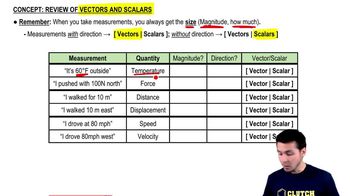
 01:55
01:55