Stress Physiology quiz #1 Flashcards

Stress Physiology quiz #1
Control buttons has been changed to "navigation" mode.
1/10
  • Which part of the nervous system is primarily responsible for reacting when the human body is subjected to stress?
    The sympathetic division of the autonomic nervous system is primarily responsible for reacting to stress by mobilizing resources for the fight or flight response.
  • How is the hypothalamus involved in the development of burnout or prolonged stress responses?
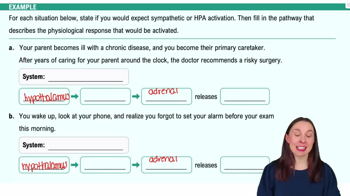
    The hypothalamus initiates the stress response by activating the HPA axis, signaling the pituitary gland to stimulate the adrenal cortex to release cortisol, which sustains the body's response to prolonged stress and can contribute to burnout.
  • What term describes the time it takes for a person to respond to an event or situation?
    The term 'reaction time' describes the time it takes for a person to engage or respond to an event or situation.
  • What are some possible effects of excess cortisol in the body?
    Excess cortisol can suppress immune function, increase glucose availability, and inhibit digestion, potentially leading to negative health effects if sustained over time.
  • How does exposure to stress affect hormone secretion by glands in the body?
    Exposure to stress causes the adrenal glands to increase secretion of stress hormones, such as adrenaline and cortisol, through activation of the sympathetic nervous system and the HPA axis.
  • A person who remains calm during difficult situations is exhibiting which characteristic?
    A person who stays calm during difficult situations is exhibiting resilience.
  • What are some examples of psychosomatic responses to stress?
    Psychosomatic responses to stress can include physical symptoms such as increased heart rate, suppressed digestion, and changes in immune function, all resulting from physiological stress mechanisms.
  • What are the two main parts of the adrenal glands and which stress hormones do they release?
    The adrenal glands consist of the medulla, which releases adrenaline, and the cortex, which releases cortisol. These hormones are crucial for immediate and prolonged stress responses, respectively.
  • How does the body prioritize blood flow during sympathetic activation in response to stress?
    During sympathetic activation, blood flow to the muscles increases while blood flow to the gut decreases. This prioritization prepares the body for physical activity and reduces focus on digestion.
  • What does each letter in the HPA axis acronym stand for, and what is the sequence of activation?
    HPA stands for hypothalamus, pituitary, and adrenal. The sequence begins with the hypothalamus signaling the pituitary gland, which then signals the adrenal cortex to release cortisol.