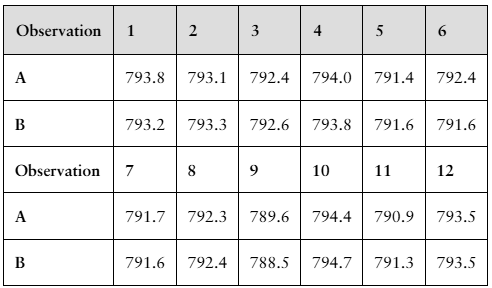
[NW] [DATA] Muzzle Velocity The following data represent the muzzle velocity (in feet per second) of rounds fired from a 155-mm gun. For each round, two measurements of the velocity were recorded using two different measuring devices, with the following data obtained: a. Why are these matched-pairs data?
Verified step by step guidance
1
Step 1: Understand the concept of matched-pairs data. Matched-pairs data occur when two measurements are taken on the same subject or item under different conditions or using different methods, allowing direct comparison between the pairs.
Step 2: Observe the data table where each observation (1 to 12) has two measurements: one from device A and one from device B, both measuring the muzzle velocity of the same round.
Step 3: Recognize that each pair of measurements (A and B) corresponds to the same round fired, meaning the data are naturally paired because they relate to the same experimental unit.
Step 4: Conclude that these are matched-pairs data because each round has two related measurements, one from each device, allowing us to compare the devices' measurements directly for the same round.
Step 5: This pairing controls for variability between rounds, focusing the comparison on differences between the two measurement devices rather than differences between rounds.
Verified video answer for a similar problem:
This video solution was recommended by our tutors as helpful for the problem above
Video duration:
1m
Play a video:
0 Comments
Key Concepts
Here are the essential concepts you must grasp in order to answer the question correctly.
Matched-Pairs Data
Matched-pairs data arise when two related measurements are taken on the same subject or item, allowing direct comparison. In this case, each round has two velocity measurements from different devices, creating pairs that are naturally linked. This pairing controls for variability between rounds, focusing analysis on differences between measurement methods.
Paired differences refer to the difference between two related measurements in each pair. By calculating these differences, we can analyze whether there is a significant discrepancy between the two devices. This approach reduces variability caused by individual rounds and isolates the effect of the measurement method.
Using matched pairs helps control for variability inherent in the rounds themselves, as each pair shares the same underlying condition. This control improves the accuracy and reliability of comparisons between devices by minimizing confounding factors, making statistical tests more powerful and meaningful.