Find one solution for each equation. Assume all angles involved are acute angles. See Example 3. cot(5θ + 2°) = tan(2θ + 4°)
Table of contents
- 0. Review of College Algebra4h 45m
- 1. Measuring Angles40m
- 2. Trigonometric Functions on Right Triangles2h 5m
- 3. Unit Circle1h 19m
- 4. Graphing Trigonometric Functions1h 19m
- 5. Inverse Trigonometric Functions and Basic Trigonometric Equations1h 41m
- 6. Trigonometric Identities and More Equations2h 34m
- 7. Non-Right Triangles1h 38m
- 8. Vectors2h 25m
- 9. Polar Equations2h 5m
- 10. Parametric Equations1h 6m
- 11. Graphing Complex Numbers1h 7m
3. Unit Circle
Defining the Unit Circle
Problem 78
Textbook Question
Find a formula for the area of each figure in terms of s.
Verified step by step guidance1
Identify the type of figure you are working with (e.g., square, triangle, circle) since the formula for area depends on the shape.
Recall the general formula for the area of the figure in terms of its side length \(s\). For example, for a square, the area is given by \(A = s^2\).
If the figure is a triangle, determine if it is equilateral or right-angled, and use the appropriate formula. For an equilateral triangle, the area is \(A = \frac{\sqrt{3}}{4} s^2\).
For a circle, if \(s\) represents the radius, the area formula is \(A = \pi s^2\). If \(s\) is the diameter, express the radius as \(\frac{s}{2}\) before applying the formula.
Write the final formula expressing the area \(A\) solely in terms of \(s\), ensuring all constants and coefficients are included correctly.
Verified video answer for a similar problem:This video solution was recommended by our tutors as helpful for the problem above
Video duration:
3mPlay a video:
0 Comments
Key Concepts
Here are the essential concepts you must grasp in order to answer the question correctly.
Area Formulas for Geometric Figures
Understanding the standard formulas for the area of common geometric shapes (such as triangles, squares, rectangles, and circles) is essential. These formulas express area in terms of side lengths or other dimensions, allowing you to relate the variable 's' to the figure's area.
Recommended video:
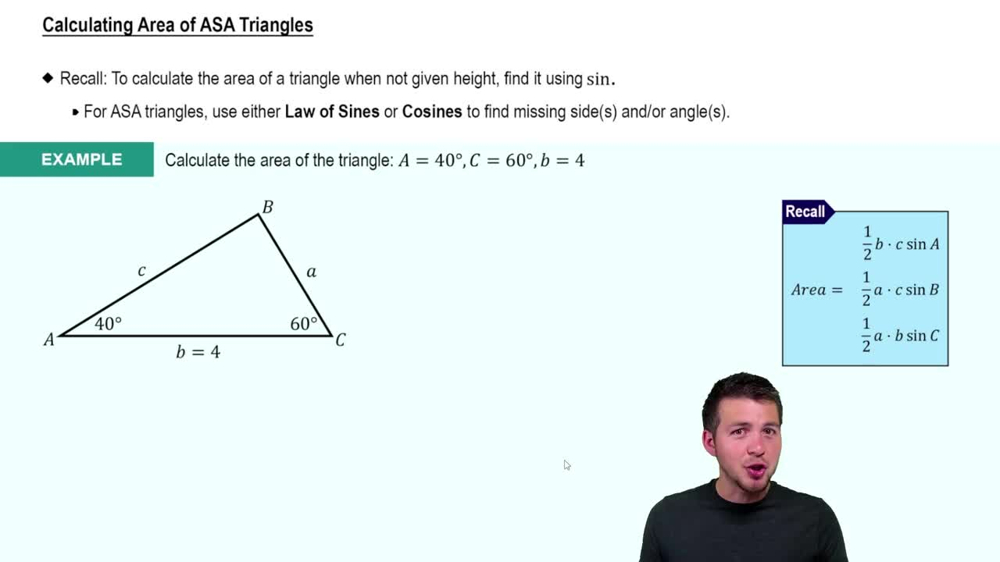
Calculating Area of ASA Triangles
Expressing Dimensions in Terms of a Variable
To write the area in terms of 's', you must be able to express all relevant dimensions (like height, base, radius) as functions of 's'. This often involves using relationships within the figure or applying algebraic manipulation to rewrite measurements accordingly.
Recommended video:
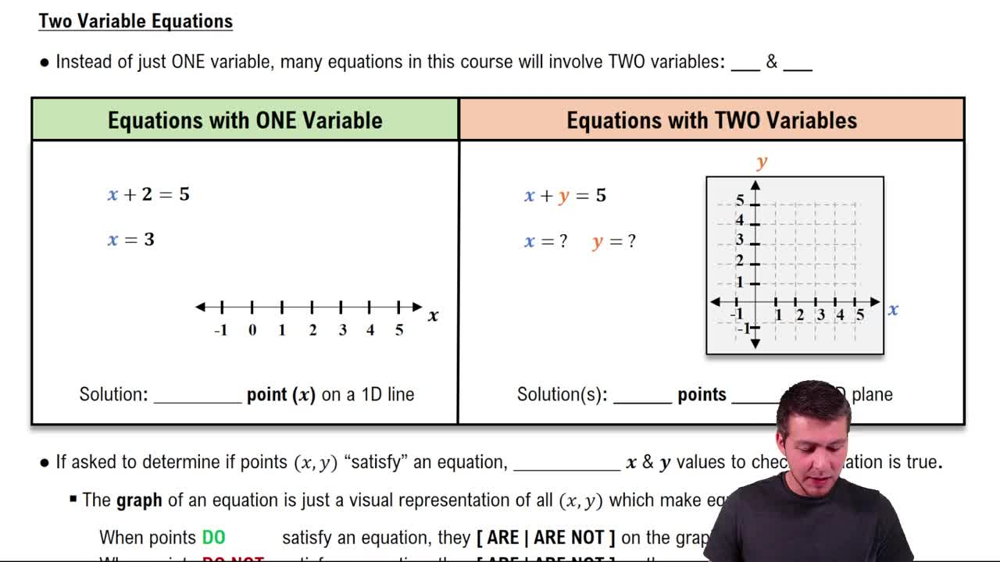
Equations with Two Variables
Trigonometric Relationships in Geometry
When figures involve angles or non-right triangles, trigonometric functions (sine, cosine) help relate side lengths and heights. Using these relationships allows you to find missing dimensions needed to express the area formula solely in terms of 's'.
Recommended video:
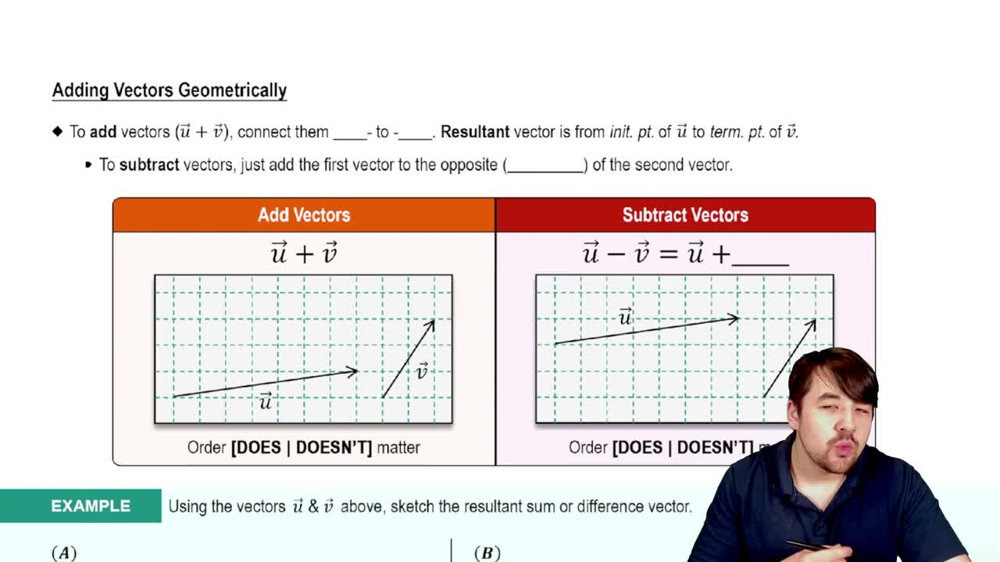
Adding Vectors Geometrically
Related Videos
Related Practice
Textbook Question
593
views