
Textbook Question
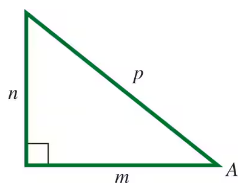
Determine whether each statement is true or false. If false, tell why. csc 22° ≤ csc 68°
636
views

 Verified step by step guidance
 6:04
6:04
 3:47
3:47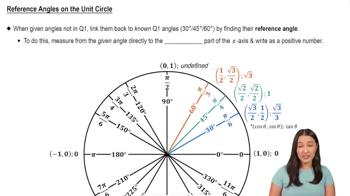 5:31
5:31Determine whether each statement is true or false. If false, tell why. csc 22° ≤ csc 68°
Concept Check Refer to the discussion of accuracy and significant digits in this section to answer the following. WNBA Scorer Women's National Basketball Association player Breanna Stewart of the Seattle Storm was the WNBA's top scorer for the 2018 regular season, with 742 points. Is it appropriate to consider this number between 741.5 and 742.5? Why or why not? (Data from www.wnba.com)
Concept Check Match each angle in Column I with its reference angle in Column II. Choices may be used once, more than once, or not at all. See Example 1. I. II. 5. A. 45° 6. B. 60° 7. C. 82° 8. D. 30° 9. E. 38° 10. 480° F. 32°
Concept Check Refer to the discussion of accuracy and significant digits in this section to answer the following. Mt. Everest When Mt. Everest was first surveyed, the surveyors obtained a height of 29,000 ft to the nearest foot. State the range represented by this number. (The surveyors thought no one would believe a measurement of 29,000 ft, so they reported it as 29,002.) (Data from Dunham, W., The Mathematical Universe, John Wiley and Sons.)
Determine whether each statement is true or false. If false, tell why. tan 60° ≥ cot 40°
CONCEPT PREVIEW Match each trigonometric function value or angle in Column I with its appropriate approximation in Column II.
Column I: 1.
tan⁻¹ 30
Column II:
A. 88.09084757°
B. 63.25631605°
C. 1.909152433°
D. 17.45760312°
E. 0.2867453858
F. 1.962610506
G. 14.47751219°
H. 1.015426612
I. 1.051462224
J. 0.9925461516