According to the fluid mosaic model of membrane structure, proteins of the membrane are mostlya. spread in a continuous layer over the inner and outer surfaces of the membrane.b. confined to the hydrophobic interior of the membrane.c. embedded in a lipid bilayer.d. randomly oriented in the membrane, with no fixed inside-outside polarity.
Verified step by step guidance
1
Understand the structure of the cell membrane as described by the fluid mosaic model. This model suggests that the membrane is a flexible layer made of lipid molecules and is interspersed with proteins.
Identify the role of the lipid bilayer, which forms the basic structure of the membrane. It is composed of two layers of lipid molecules with hydrophobic tails facing inward and hydrophilic heads facing outward.
Consider the arrangement of proteins in the membrane. According to the fluid mosaic model, proteins are not just on the surface but are embedded within the lipid bilayer.
Analyze the options given in the question and relate them to the description of the fluid mosaic model. Focus on where the proteins are located in relation to the lipid bilayer.
Choose the option that correctly describes the positioning of proteins in the cell membrane according to the fluid mosaic model.
Verified video answer for a similar problem:
This video solution was recommended by our tutors as helpful for the problem above
Video duration:
2m
Play a video:
0 Comments
Key Concepts
Here are the essential concepts you must grasp in order to answer the question correctly.
Fluid Mosaic Model
The fluid mosaic model describes the structure of cell membranes as a dynamic and flexible arrangement of various components, including lipids and proteins. In this model, the lipid bilayer acts as a fluid matrix, allowing proteins to move laterally within the layer, contributing to the membrane's functionality and adaptability.
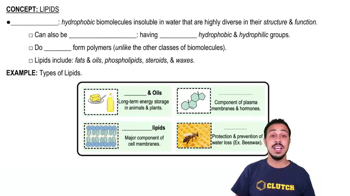
The lipid bilayer is a fundamental structure of cell membranes, composed of two layers of phospholipids. The hydrophilic (water-attracting) heads face outward towards the aqueous environment, while the hydrophobic (water-repelling) tails face inward, creating a barrier that separates the interior of the cell from the external environment.
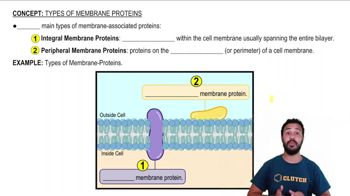
Membrane proteins are integral or peripheral proteins that perform various functions within the cell membrane, such as transport, signaling, and structural support. They can be embedded within the lipid bilayer or attached to its surface, and their orientation and distribution are crucial for maintaining cellular functions and communication.

 2:27 minutes
 Verified step by step guidance
 3:33
3:33