Ch. 14 The Autonomic Nervous System and Homeostasis
Amerman - Human Anatomy & Physiology 2nd Edition
Amerman2nd EditionHuman Anatomy & PhysiologyISBN: 9780136873822Not the one you use?Change textbook
Chapter 14, Problem L3.A1

Which cranial nerves would be affected by a drug that stimulates the parasympathetic nervous system? Predict potential adverse effects that one might experience.

Verified step by step guidance
1
Step 1: Understand the parasympathetic nervous system's role. The parasympathetic nervous system is part of the autonomic nervous system and is responsible for 'rest and digest' functions, such as slowing heart rate, increasing digestive activity, and promoting glandular secretions.
Step 2: Identify cranial nerves involved in parasympathetic functions. The cranial nerves that carry parasympathetic fibers include: (1) CN III (Oculomotor nerve), which controls pupil constriction and lens accommodation; (2) CN VII (Facial nerve), which stimulates salivary and lacrimal glands; (3) CN IX (Glossopharyngeal nerve), which stimulates the parotid salivary gland; and (4) CN X (Vagus nerve), which influences heart rate, digestion, and other visceral functions.
Step 3: Predict the effects of stimulating these cranial nerves. For example, stimulation of CN III may cause excessive pupil constriction (miosis) and difficulty focusing on distant objects. Stimulation of CN VII and CN IX may lead to excessive salivation and tearing. Stimulation of CN X may result in slowed heart rate (bradycardia) and increased digestive activity, potentially causing nausea or diarrhea.
Step 4: Consider potential adverse effects. Overactivation of the parasympathetic nervous system could lead to symptoms such as dizziness (due to bradycardia), excessive salivation, tearing, gastrointestinal discomfort, or difficulty with vision due to overly constricted pupils.
Step 5: Relate the drug's mechanism to clinical implications. A drug that stimulates the parasympathetic nervous system may be useful in certain conditions (e.g., glaucoma or dry mouth), but its adverse effects must be carefully monitored to avoid complications like hypotension, excessive glandular secretions, or gastrointestinal distress.

Verified video answer for a similar problem:

This video solution was recommended by our tutors as helpful for the problem above.
Was this helpful?

Key Concepts

Here are the essential concepts you must grasp in order to answer the question correctly.

Cranial Nerves

Cranial nerves are a set of twelve paired nerves that originate in the brain and primarily serve the head and neck regions. They are responsible for various functions, including sensory perception, motor control, and autonomic functions. Key cranial nerves involved in the parasympathetic nervous system include the vagus nerve (CN X), which influences heart rate and digestion, and the oculomotor nerve (CN III), which controls pupil constriction.
Recommended video:
Guided course
8:20
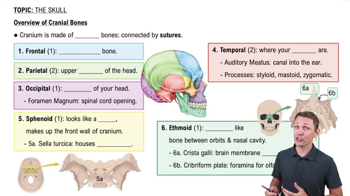
Overview of Cranial Bones

Parasympathetic Nervous System

The parasympathetic nervous system is one of the two main divisions of the autonomic nervous system, responsible for promoting 'rest and digest' activities. It conserves energy by slowing the heart rate, increasing intestinal and gland activity, and relaxing sphincter muscles. Stimulation of this system can lead to various physiological responses, such as increased salivation, lacrimation, urination, digestion, and defecation.
Recommended video:
1:56
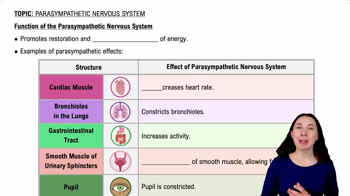
Function of the Parasympathetic Nervous System

Adverse Effects of Parasympathetic Stimulation

Adverse effects from drugs that stimulate the parasympathetic nervous system can include bradycardia (slow heart rate), hypotension (low blood pressure), excessive salivation, diarrhea, and bronchoconstriction. These effects occur due to the overactivity of the parasympathetic responses, which can disrupt normal bodily functions and lead to discomfort or health complications. Understanding these potential side effects is crucial for predicting patient responses to such medications.
Recommended video:
1:32
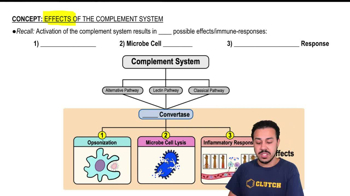
Effects of the Complement System
Related Practice
Textbook Question

Sympathetic preganglionic neurons synapse:


a. directly on target cells.

b. on skeletal muscle fibers.

c. on sympathetic chain or collateral ganglia.

d. on vagal ganglia.

691
views

Textbook Question

Many chemical warfare agents, such as the poisonous gas sarin, block the enzyme acetylcholinesterase in the synaptic cleft. What effects will this poison have on muscle contraction? What effects will it have on the autonomic nervous system? What symptoms would you expect to see from this poison?

642
views
Textbook Question

A patient, Dr. Young, has both asthma and high blood pressure. Her physician prescribed the drug propranolol to treat her hypertension; this drug blocks all types of β-adrenergic receptors. She also takes the drug albuterol for asthma, which activates β2 receptors on bronchial smooth muscle. Will the pairing of these two drugs cause problems for Dr. Young? Explain.

642
views
Textbook Question

Mr. Chevalier has been diagnosed with Horner syndrome, which is caused by dysfunction of the sympathetic neurons in the superior cervical ganglion that innervate structures of the head, face, and neck. What symptoms is Mr. Chevalier likely to face due to his disease? Explain.

767
views
Textbook Question

Differentiate between adrenergic and cholinergic receptors.

2149
views
Textbook Question

The poison curare (kyoo-RAH-ray) blocks the binding of acetylcholine to its receptors at the neuromuscular junction. What effects would you predict from such a poison? Can you think of any useful applications for it? Why might an overdose of it be lethal?

847
views