Ch. 5 The Skeletal System
Marieb - Essentials of Human Anatomy & Physiology 13th Edition
Marieb13th EditionEssentials of Human Anatomy & PhysiologyISBN: 9780135624340Not the one you use?Change textbook
Chapter 5, Problem 10

At what stage of life do the lower limbs attain the same height as the head and trunk?
a. At birth
b. By 10 years of age
c. At puberty
d. When the epiphyseal plates fuse
e. Never

Verified step by step guidance
1
Understand the growth patterns of the human body: At birth, the head and trunk are proportionally larger compared to the lower limbs. As a person grows, the lower limbs lengthen significantly during childhood and adolescence.
Review the concept of epiphyseal plates: These are growth plates located at the ends of long bones. They remain active during growth periods and fuse after puberty, marking the end of height increase.
Analyze the options: At birth (option a), the lower limbs are shorter relative to the head and trunk. By 10 years of age (option b), the lower limbs have grown but may not yet match the height of the head and trunk. At puberty (option c), rapid growth occurs, especially in the lower limbs. When the epiphyseal plates fuse (option d), growth stops, and proportions are finalized. Option e suggests the lower limbs never attain the same height as the head and trunk.
Consider the timing of proportional changes: During puberty, the lower limbs experience a growth spurt, which often results in proportions that are closer to the head and trunk. However, the exact timing can vary among individuals.
Conclude based on anatomical growth patterns: The lower limbs typically attain proportions similar to the head and trunk during puberty or when growth ceases after the epiphyseal plates fuse. Evaluate the options to determine which best aligns with this understanding.

Verified video answer for a similar problem:

This video solution was recommended by our tutors as helpful for the problem above.
Video duration:
2m
Was this helpful?

Key Concepts

Here are the essential concepts you must grasp in order to answer the question correctly.

Growth Patterns in Human Development

Human growth occurs in distinct stages, with different body parts growing at varying rates. Infants typically have proportionally larger heads compared to their bodies, while the limbs grow more significantly during childhood and adolescence. Understanding these growth patterns is essential to determine when the lower limbs reach the same height as the head and trunk.
Recommended video:
4:48
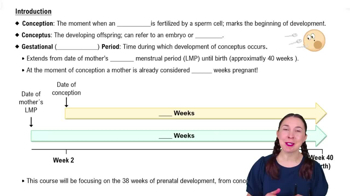
Introduction to Human Development

Epiphyseal Plates and Growth

Epiphyseal plates, or growth plates, are areas of developing cartilage tissue located at the ends of long bones. They are crucial for bone growth during childhood and adolescence. Once these plates fuse, typically after puberty, further growth in length ceases, marking a significant transition in physical development.
Recommended video:
04:02
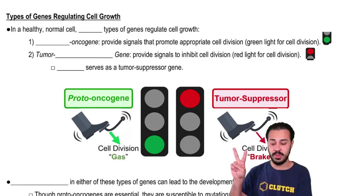
Types of Genes Regulating Cell Growth

Proportional Growth Changes

Proportional growth refers to how different parts of the body grow in relation to each other. During early childhood, the lower limbs grow rapidly, eventually reaching a point where they are proportionate to the trunk and head. This concept is vital for understanding the timing of when the lower limbs attain equal height with the head and trunk.
Recommended video:
03:31
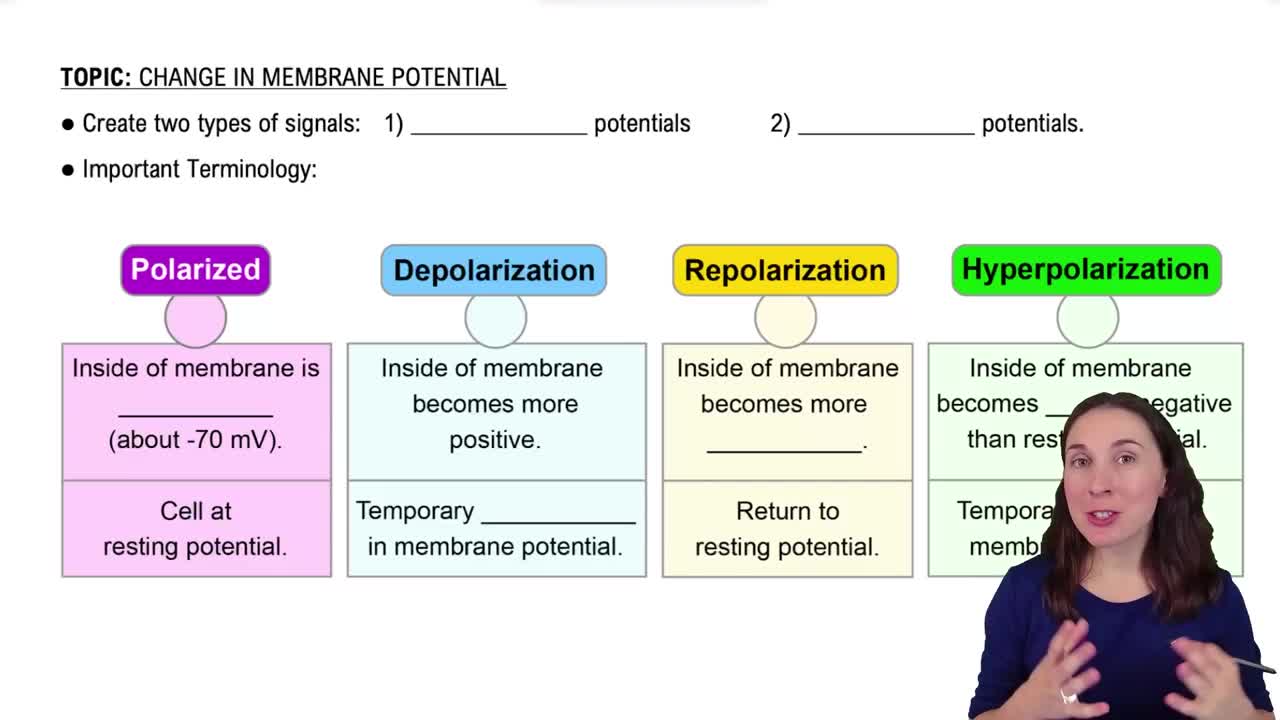
Change in Membrane Potential