Two examples of chemotherapeutic drugs (drugs used to treat cancer) and their cellular actions are listed below. Explain why each drug could be fatal to a cell. • Vincristine (brand name Oncovin): damages the mitotic spindle • Doxorubicin (Adriamycin): binds to DNA and blocks mRNA synthesis
Verified step by step guidance
1
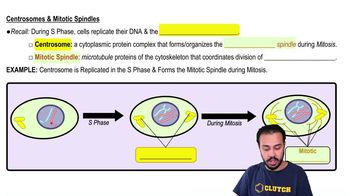
Understand the role of the mitotic spindle in cell division: The mitotic spindle is essential for separating chromosomes during mitosis, ensuring each daughter cell receives the correct number of chromosomes.
Analyze how Vincristine affects the cell: Since Vincristine damages the mitotic spindle, it disrupts chromosome separation, leading to cell cycle arrest or cell death because the cell cannot properly divide.
Understand the process of mRNA synthesis (transcription): mRNA synthesis is crucial for producing proteins needed for cell survival and function, as it carries genetic information from DNA to the ribosome.
Analyze how Doxorubicin affects the cell: By binding to DNA and blocking mRNA synthesis, Doxorubicin prevents the cell from making essential proteins, which can halt cell function and lead to cell death.
Summarize why both drugs can be fatal: Both drugs interfere with critical cellular processes—Vincristine disrupts mitosis, and Doxorubicin blocks protein synthesis—leading to the inability of the cell to survive or proliferate.
Verified video answer for a similar problem:
This video solution was recommended by our tutors as helpful for the problem above
Video duration:
3m
Play a video:
0 Comments
Key Concepts
Here are the essential concepts you must grasp in order to answer the question correctly.
Mitotic Spindle and Cell Division
The mitotic spindle is a structure composed of microtubules that segregates chromosomes during cell division. Damage to the spindle, as caused by vincristine, prevents proper chromosome separation, leading to cell cycle arrest and apoptosis, which can be fatal to rapidly dividing cells like cancer cells.
Doxorubicin binds directly to DNA, interfering with the process of transcription by blocking mRNA synthesis. This halts the production of essential proteins, disrupting cellular functions and leading to cell death, especially in cells that require high rates of protein synthesis.
Chemotherapeutic drugs target critical cellular processes to kill cancer cells. By disrupting mitosis or DNA function, these drugs induce fatal damage that normal cells can sometimes repair, but cancer cells, due to their rapid division and altered repair mechanisms, are more susceptible to death.